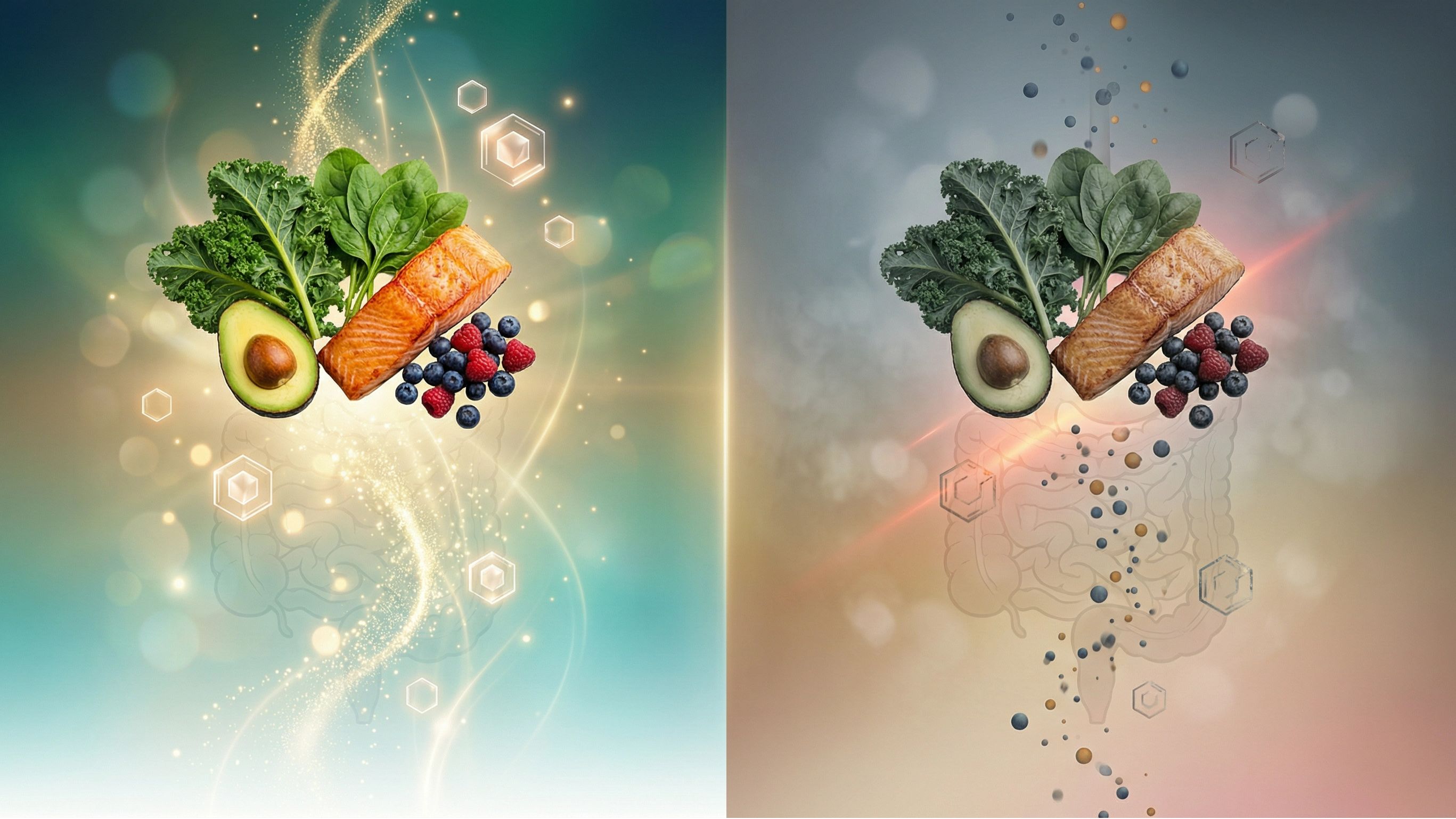
The digestive enzyme benefits you're missing when you treat symptoms instead of root causes
You've tried probiotics. You've cut gluten, dairy, maybe even nightshades. You're eating organic, taking your supplements, doing everything "right."
Yet bloating still shows up after meals, brain fog lingers through the afternoon, and that heavy, exhausted feeling never quite lifts.
Here's what most people don't realize: you could be eating the cleanest diet on the planet, but if your body can't break down and absorb those nutrients, you're running on empty.
The digestive enzyme benefits that should be supporting your health might be working against you when production declines.
In this article, you'll discover why enzyme function matters more than you think, the signs your body is struggling, and the practical steps that address the root cause rather than masking symptoms.
Keep reading — what you learn here could finally explain why nothing else has worked.
Key Takeaways
- Digestive enzyme production naturally declines with age, with research showing enzyme output can be reduced by 40% in older individuals compared to younger subjects,¹ affecting how well you break down proteins, fats, and carbohydrates.
- Enzyme deficiency symptoms include bloating after meals, undigested food in stool, chronic fatigue following eating, and new food sensitivities developing over time.²
- Natural digestive enzymes from foods like papaya and pineapple provide proteolytic enzymes that support protein breakdown, though they may not address individual deficiencies.³
- When gut barrier function becomes compromised, it can trigger inflammatory responses and allow undigested food particles to enter the bloodstream, potentially contributing to systemic inflammation and autoimmune conditions.⁴,⁵
- Comprehensive gut testing that includes food sensitivity panels and gut barrier markers provides the only reliable way to identify which specific foods are causing inflammation and whether enzyme supplementation addresses your individual needs.
Stop Guessing About Your Gut Issues
Comprehensive gut testing reveals what's really happening
Professional interpretation by licensed practitioners included
Why digestive enzyme benefits go beyond breaking down your breakfast
Sarah had spent two years working with doctors on her digestive issues. Clean eating, expensive probiotics, elimination diets — she'd tried everything.
"I felt like I was doing everything right," she told us, "but I was still bloated, exhausted, and my brain felt foggy all the time."
What Sarah didn't know was that her body wasn't producing enough enzymes to break down the healthy foods she was eating.
Without adequate enzymes, even nutrient-dense meals were passing through partially digested, creating inflammation and leaving her malnourished despite a perfect diet.
This is the digestive enzyme benefit most people never consider: enzymes don't just help you digest — they determine whether you actually absorb the nutrients you're paying good money for.
Your body produces three main categories of digestive enzymes.
Proteases break down proteins into amino acids. Amylases handle carbohydrates, converting them into simple sugars. Lipases tackle fats, breaking them into fatty acids your body can use.⁶
When any of these decline, digestion becomes incomplete, and the consequences ripple through your entire system.
Your Body's Three Enzyme Categories
Each plays a critical role in breaking down the food you eat
Proteases
Protein Breakdown Specialists
Break Down: Proteins → Amino Acids
Found In: Chicken, fish, eggs, legumes, dairy
💡 Without adequate proteases, protein sits undigested and can trigger inflammation
Amylases
Carbohydrate Breakdown Specialists
Break Down: Carbohydrates → Simple Sugars
Found In: Rice, bread, potatoes, pasta, grains
💡 Amylase deficiency leads to gas, bloating, and blood sugar fluctuations
Lipases
Fat Breakdown Specialists
Break Down: Fats → Fatty Acids
Found In: Avocado, nuts, oils, butter, fatty fish
💡 Lipase deficiency causes greasy stools and vitamin A, D, E, K deficiencies
Research published in multiple clinical studies shows that digestive enzyme supplementation can significantly improve symptoms of functional dyspepsia, reduce bloating and discomfort, and enhance overall quality of life.⁷
One randomized, double-blind trial found that participants taking a multi-enzyme blend for two months experienced marked improvement in digestive symptoms, quality of life, and even sleep quality.⁷
But here's what conventional approaches often miss:
Treating bloating with antacids or recommending more fiber without addressing enzyme function is like trying to fix a broken blender by adding more ingredients.
The problem isn't what's going in — it's the mechanism that's struggling to break it down.
See How It All Connects
Understanding the complete picture is the first step to lasting gut health
Discover the systematic approach to gut healing that addresses root causes, not just symptoms
Expert insights from functional medicine practitioners
The signs your body is crying out for enzyme support
Michael noticed he couldn't eat the same way he did in his thirties.
"I'd have chicken and vegetables for dinner — nothing crazy — and I'd be uncomfortable for hours," he explained. "My stomach would feel full and tight, and I'd wake up the next morning still feeling it."
What Michael was experiencing is one of the most common signs of enzyme insufficiency: prolonged fullness and discomfort after protein-rich meals.
Research confirms that pancreatic enzyme secretion decreases with age, with studies showing enzyme output following stimulation can be 40% reduced in older subjects compared to younger individuals.¹
Watch for these warning signs:
5 Warning Signs Your Body Needs Enzyme Support
Recognizing these patterns is the first step toward healing
Bloating Within 30-60 Minutes of Eating
Especially after protein or fat-heavy meals. This quick onset signals food isn't breaking down properly in your stomach.
Visible Undigested Food in Stool
Clear evidence that nutrients are passing through without absorption. You're eating well but still malnourished.
Chronic Fatigue After Meals
Instead of energy, you feel exhausted. Incomplete digestion triggers inflammation that drains your vitality.
New Food Sensitivities Developing
Foods you've eaten for years suddenly cause problems. Declining enzymes create gut barrier issues that trigger reactions.
Greasy or Foul-Smelling Stools
Specific indicator of lipase deficiency. Undigested fats lead to vitamin deficiencies and multiple health issues.
⚡ Experiencing 2 or more? Your body is signaling enzyme insufficiency.
Bloating that appears 30-60 minutes after eating, especially after meals containing protein or fat, suggests your body is struggling to break down these macronutrients.
Unlike bloating from food sensitivities that can appear hours later, enzyme-related bloating typically shows up quickly as partially digested food sits in your digestive tract.
Visible undigested food in your stool indicates food is passing through without proper breakdown.
This isn't just uncomfortable — it means you're not absorbing the nutrients from the food you're eating, even if your diet is impeccable.
Chronic fatigue after meals rather than sustained energy points to the inflammatory cascade that occurs when your gut can't properly process food.⁸
Breaking the cycle between digestive issues and chronic fatigue requires addressing the root cause of incomplete digestion.
New food sensitivities developing over time, especially to foods you've eaten your whole life, often signals that declining enzyme production is creating gut barrier issues. When food isn't properly broken down, larger protein fragments can trigger inflammatory responses and compromise gut health confidence.
Greasy or foul-smelling stools specifically indicate lipase deficiency — your body can't break down fats properly, leading to fat malabsorption and deficiencies in fat-soluble vitamins A, D, E, and K.²
The challenge? These symptoms develop gradually.
Most people adapt to feeling less than optimal, never realizing their digestive system is working at half capacity. They chalk it up to aging or stress, when the real issue is measurable and addressable.
What's Really Happening in Your Gut?
Stop guessing. Start knowing with comprehensive testing.
Testing Reveals:
Guesswork keeps you stuck. Data shows you the way forward.
Receive personalized protocols based on your unique results
Natural digestive enzymes and when to take digestive enzymes
Lisa loved the idea of getting enzymes from whole foods.
"I started eating fresh papaya and pineapple with my meals," she shared. "It helped a little, but I was still having issues. I didn't understand why."
Here's what Lisa discovered: while natural digestive enzymes from food sources provide benefits, they rarely provide therapeutic amounts for someone with significant enzyme deficiency.
Fresh papaya contains papain, a proteolytic enzyme that helps break down proteins.³ Pineapple offers bromelain, another powerful protein-digesting enzyme with anti-inflammatory properties.³
Research shows these plant-based enzymes can support digestive function and even promote beneficial gut bacteria growth.⁹
Other enzyme-rich foods include ripe mangoes (amylase for carbohydrates), avocados (lipase for fats), and fermented foods like kefir and sauerkraut (multiple enzymes plus probiotics).¹⁰
Including these in your diet supports your body's natural digestive processes — think of them as gentle, daily maintenance.
But when enzyme deficiency symptoms are significant, food sources alone typically aren't enough.
The concentration of active enzymes in whole foods varies based on ripeness, storage, and preparation.
Heat destroys many enzymes, which is why cooked pineapple won't provide the same benefits as fresh.
This is why understanding when to take digestive enzymes matters.
For optimal results, enzyme supplements should be taken at the beginning of meals, when they can work alongside your body's natural enzyme production to break down food as you eat it.¹¹
Taking them too early means they activate before food arrives; too late, and digestion has already begun without adequate enzyme support.
The most effective approach combines natural enzyme sources with targeted supplementation based on your specific deficiencies — which brings us back to testing rather than guessing.
Tired of Random Supplements That Don't Work?
Get personalized insights that pinpoint YOUR specific needs
Comprehensive Testing Pinpoints:
No more guessing. Just clear answers and actionable protocols.
What conventional medicine and even functional approaches sometimes overlook
Here's where things get interesting: conventional medicine excels at diagnosing severe enzyme deficiencies like exocrine pancreatic insufficiency and prescribing pharmaceutical enzyme replacement.
These approaches save lives for people with cystic fibrosis, chronic pancreatitis, and pancreatic cancer.¹²
But there's a massive gap for everyone else — people with subclinical enzyme deficiency who don't meet the diagnostic criteria for severe disease but suffer daily from incomplete digestion.
Standard medical testing often returns "normal" results while symptoms persist.
Many functional medicine practitioners jump straight to recommending broad-spectrum enzyme supplements without testing. While this sometimes helps, it's still guessing rather than measuring.
Different people need different enzyme combinations based on their unique digestive challenges.
The real breakthrough happens when you can see exactly what's happening in your gut: which foods are triggering inflammatory responses, whether your gut barrier is compromised, and where your specific vulnerabilities lie.
Testing for food sensitivities reveals the delayed reactions occurring 2-72 hours after eating — the ones you'd never connect to specific foods on your own.
Gut barrier markers show whether your intestinal lining is maintaining its integrity or allowing undigested food particles to trigger systemic inflammation.⁴,⁵
This is the information that transforms random symptom management into targeted, effective intervention.
From Symptoms to Root Causes
Understanding the complete picture reveals why symptoms persist
Layer 1: Surface Symptoms
What you feel every day
Layer 2: The Visible Problem
What most people treat
⚙️ Enzyme Deficiency
Your body isn't producing enough proteases, amylases, or lipases to break down food properly.
Layer 3: The Root Causes
What comprehensive testing reveals
🍎 Hidden Food Sensitivities
Chronic inflammation from foods your immune system reacts to
🛡️ Gut Barrier Dysfunction
Intestinal permeability allowing undigested particles into bloodstream
🔥 Chronic Inflammation
Systemic inflammatory response reducing enzyme production
💡 Treating symptoms alone = temporary relief
Addressing root causes = lasting transformation
Moving from symptom management to root cause resolution
Marcus had been taking generic digestive enzymes for months with minimal improvement.
"I figured I just had bad digestion and would have to deal with it," he said. Then he decided to get comprehensive testing.
The results surprised him: severe reactions to foods he ate daily, elevated markers indicating gut barrier dysfunction, and clear patterns showing his enzyme issues were secondary to undiagnosed food sensitivities.
"Once I removed my trigger foods and addressed my gut barrier, my enzyme production actually improved. My natural digestion got better because I stopped constantly inflaming my gut."
This is the approach that creates lasting change rather than indefinite supplementation.
Yes, enzyme support helps during the healing process.
But addressing why your body isn't producing adequate enzymes — chronic inflammation from food sensitivities, gut barrier dysfunction, stress-induced changes to digestive secretions — this is what allows your system to restore normal function.
The comprehensive testing approach examines:
- Food sensitivities to identify inflammatory triggers you'd never suspect
- Gut barrier function through markers that show whether your intestinal lining is compromised
- Bacterial imbalances that might be interfering with digestion
- Inflammatory markers that reveal systemic issues stemming from gut dysfunction
Understanding leaky gut testing helps you find the damage that standard tests miss — the root causes that explain why symptoms persist despite your best efforts.
Stop Treating Symptoms in Isolation
See the complete picture of what's driving your digestive issues
Comprehensive Testing Reveals:
When you understand how these three factors interact, you can finally address the root cause instead of chasing symptoms.
Complete picture. Targeted solutions. Lasting results.
The path forward starts with understanding what's actually happening
You've been treating symptoms long enough.
The bloating, the fatigue, the food sensitivities that seem to multiply — these aren't random problems requiring random solutions. They're signals from a digestive system that needs specific support, not generic interventions.
Digestive enzyme benefits extend far beyond simply breaking down food.
When your enzymes work properly, you absorb nutrients effectively, maintain gut barrier integrity, support immune function, and sustain steady energy throughout the day.
When they don't, even the healthiest diet leaves you depleted and inflamed.
The question isn't whether digestive enzymes matter — the research confirms they do.
The question is whether you'll keep guessing about what your body needs, or whether you'll get the testing that reveals your specific path to healing.
Natural enzyme sources support daily maintenance. Strategic supplementation provides therapeutic intervention. Comprehensive testing reveals which approach your body actually needs.
And addressing root causes — food sensitivities, gut barrier dysfunction, inflammatory triggers — creates the foundation for lasting digestive health.
Your gut has been trying to tell you something. It's time to listen with tools that actually provide answers.
Finally Heal Your Gut With Clarity
Your personalized roadmap to lasting digestive health starts here
Your Personalized Roadmap Includes:
Transform frustration into answers. Replace guesswork with data. Start your healing journey today.
💙 Trusted by thousands seeking root-cause solutions
🔬 Professional interpretation by licensed practitioners
✨ Comprehensive protocols tailored to your results

Sources
- Journal of Internal Medicine. (2018). The ageing pancreas: a systematic review of the evidence and analysis of the consequences.
- Johns Hopkins Medicine. (2024). Digestive Enzymes and Digestive Enzyme Supplements.
- Metabolites. (2022). Effects of Proteases from Pineapple and Papaya on Protein Digestive Capacity and Gut Microbiota.
- American Physiological Society — Physiological Reviews. (2011). Zonulin and Its Regulation of Intestinal Barrier Function: The Biological Door to Inflammation, Autoimmunity, and Cancer.
- Nature Communications. (2020). Targeting zonulin and intestinal epithelial barrier function to prevent onset of arthritis.
- Curr Drug Metab. (2016). Digestive Enzyme Supplementation in Gastrointestinal Diseases.
- Biomedicine & Pharmacotherapy. (2023). Efficacy of digestive enzyme supplementation in functional dyspepsia: A monocentric, randomized, double-blind, placebo-controlled, clinical trial.
- Journal of Clinical Medicine. (2021). The Emerging Role of Gut Microbiota in Myalgic Encephalomyelitis/Chronic Fatigue Syndrome (ME/CFS): Current Evidence and Potential Therapeutic Applications.
- Frontiers in Nutrition. (2025). The role of plant-based dietary compounds in gut microbiota modulation in inflammatory bowel disease.
- Healthline. (2023). 12 Foods That Contain Natural Digestive Enzymes.
- Heliyon. (2024). In vitro simulated study of macronutrient digestion in complex food using digestive enzyme supplement.
- National Library of Medicine — StatPearls. (2025). Exocrine Pancreatic Insufficiency.