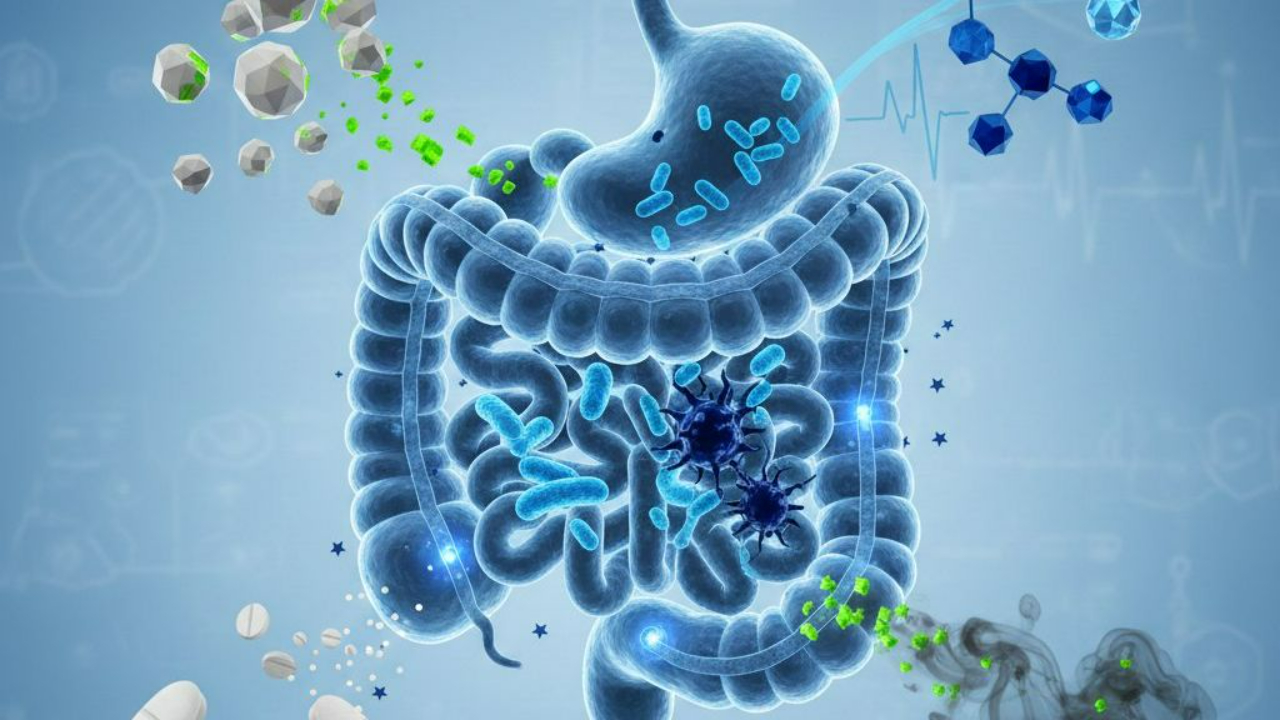
These gut inflammation causes explain why nothing has worked yet
You've been dealing with it for months — maybe years.
The bloating. The brain fog. The unexplained skin rashes. The joint pain.
You've tried elimination diets. You've taken the probiotics. But nothing sticks.
Here's what I've learned: gut inflammation doesn't happen overnight.
It's the result of multiple triggers converging¹ — and most people have no idea their seemingly unrelated symptoms all stem from the same source.
Understanding the real gut inflammation causes changes everything.
In this article, we'll explore what triggers gut inflammation and what you can actually do about it.
Somewhere in here, you'll find information that finally connects the dots. Keep reading.
Key Takeaways
- Gut inflammation results from multiple converging triggers including processed foods, stress, medications, and infections.¹
- Oral bacteria from mouth dysbiosis travel to your gut, seeding intestinal inflammation and maintaining chronic inflammatory states⁷,⁸,⁹,³⁰
- Ultra-processed foods disrupt gut microbiome balance and increase intestinal permeability, driving systemic inflammation.²,¹¹,¹³
- Chronic stress elevates cortisol levels, which directly damages gut barrier function and alters beneficial bacteria composition.³,¹⁶,¹⁸
- Common medications like NSAIDs and antibiotics cause significant intestinal damage and microbiome disruption.⁴,²⁰,²¹
- Inflammation in the gut spreads systemically, affecting your brain, joints, skin, and hormones.⁵,⁷,⁸,¹⁰
- Genetic susceptibility determines who's most vulnerable to inflammatory gut conditions.⁶,²⁷,²⁸
- Comprehensive gut testing reveals your specific inflammation triggers, ending trial-and-error guessing.
Stop Guessing. Start Healing.
Find YOUR Inflammation Triggers
Comprehensive gut testing reveals exactly what's driving your symptoms — food sensitivities, pathogenic bacteria, and gut barrier dysfunction. End the cycle of trial and error.
See Your Testing OptionsCLIA-Certified Laboratory Testing
The Oral-Gut Gateway Most People Ignore
Here's something that surprises people: your mouth directly impacts gut inflammation.³⁰
Your oral cavity has its own complex microbiome.³¹
When it's out of balance, those pathogenic bacteria don't stay put. You swallow them constantly. They travel into your digestive tract, establish colonies, and drive systemic inflammation.⁷,⁸,⁹,³⁰
Bleeding gums aren't just a dental problem — they're warning signs of microbial imbalance affecting your entire body.
The Oral-Gut Connection
How Mouth Bacteria Travel to Your Gut
Harmful bacteria overgrow in your mouth from poor oral health, diet, or medications
You swallow these bacteria constantly — approximately 1.5 liters of saliva per day
Oral pathogens establish colonies in your digestive tract, competing with beneficial bacteria
These bacteria trigger chronic immune activation and inflammatory responses in gut tissue
Bleeding gums aren't just a dental issue — they're a warning sign of microbial imbalance affecting your entire digestive system. The oral-gut pathway operates bidirectionally.
If harmful bacteria constantly flow from your mouth into your gut, you're fighting an uphill battle trying to heal.
Studies show oral dysbiosis directly seeds intestinal inflammation.⁹,³⁰ This operates bidirectionally — mouth problems affect your gut, gut problems show up in your mouth.
If you have bleeding gums, bad breath, or frequent cavities, your oral microbiome might be fueling gut inflammation.
The Oral-Gut Connection
Uncover the Hidden Inflammation Pathway
The Gateway to Health docuseries reveals how oral health impacts your entire body — including the inflammation pathway many haven't heard about.
Watch Free Now10-Day Free Access • Expert Interviews
The Hidden Food Sensitivity Factor in Your "Healthy" Diet
Here's what catches everyone off guard: sometimes the healthiest foods are the ones inflaming your gut.
Spinach triggering immune reactions. Wild-caught salmon causing inflammation. Organic blueberries your body treats like invaders.
This is the food sensitivity factor that changes everything. It's not about gluten being universally "bad" — it's about what YOUR immune system reacts against.
What Triggers Gut Inflammation?
Multiple Factors Converging on Your Digestive System
Beyond individual sensitivities, ultra-processed foods are among the most significant chronic gut inflammation causes.
These foods — protein bars, "healthy" frozen meals, flavored yogurts — contain emulsifiers and additives that directly damage your intestinal barrier.²,¹¹,¹³
Research shows they reduce microbial diversity and increase intestinal permeability.²
Your gut barrier weakens, allowing bacterial fragments and inflammatory compounds into your bloodstream.
Refined sugars feed pathogenic bacteria while starving beneficial microbes.¹²
Industrial seed oils trigger inflammatory pathways.¹⁴
Food additives prevent beneficial bacteria growth.¹³
But here's the critical piece: you might be reacting to foods you eat daily — foods you consider healthy. These IgG-mediated reactions create chronic, low-grade inflammation that accumulates over time.
The only way to know? Test, don't guess.
Which "Healthy" Foods Inflame YOUR Gut?
Stop Eating Foods That Harm You
Even spinach and salmon could trigger your inflammation. Comprehensive testing with food sensitivity panels reveals which foods YOUR body reacts to — even healthy ones.
Discover Your TriggersUpgrade to FIT 176 Panel for Complete Clarity
When Stress Becomes a Gut Destroyer
I had a patient who ate impeccably. Organic everything. Still had debilitating gut symptoms.
The missing piece? Chronic stress.
Working 70-hour weeks, sleeping five hours nightly, constantly in fight-or-flight.
When you're stressed, your hypothalamic-pituitary-adrenal (HPA) axis — your stress response command center — floods your system with cortisol.¹⁵
This is one of the most underestimated factors in what triggers gut inflammation.
In the short-term, cortisol protects. Long-term, it destroys.
This is why chronic stress directly damages gut barrier function and alters beneficial bacteria composition.³,¹⁶,¹⁸
The Stress-Gut Cycle
How Chronic Stress Creates Inflammation
A Self-Perpetuating Feedback Loop
Work pressure, sleep deprivation, constant fight-or-flight activation
HPA axis activation floods your system with stress hormones
Cortisol weakens tight junctions, increasing intestinal permeability
Beneficial bacteria decline while pro-inflammatory species dominate
Gut sends inflammatory messages back to the brain via vagus nerve
Brain perceives threat, amplifying stress and restarting the cycle
Your gut bacteria actually change in response to stress — beneficial Lactobacillus declines while pro-inflammatory species dominate.¹⁷
This creates a vicious cycle: stress changes your microbiome, which sends inflammatory signals back to your brain, increasing stress further.
Here's what most people don't know: roughly 90% of serotonin is produced in your gut.¹⁹,³² When gut inflammation disrupts this, it affects your mental state.
The Medication Trap
The medications people take to reduce pain are often hidden causes of intestinal inflammation.
NSAIDs like ibuprofen damage the small intestine in 50% of chronic users.⁴ Most have no idea because it's initially asymptomatic.
Here's how: NSAIDs inhibit cyclooxygenase enzymes (which produce prostaglandins — substances that protect your gut lining).
Without prostaglandins, your intestinal barrier fails, bacteria invade, inflammation cascades.²⁰
Using NSAIDs can expand pro-inflammatory bacteria while killing beneficial species.²¹
Antibiotics are worse. One course increases anxiety/depression risk by 20%. Multiple courses increase it by 50%.¹⁹
They indiscriminately kill good and bad bacteria, disrupting your gut for months or years.
Other culprits include proton pump inhibitors (PPIs),²² birth control pills that alter gut microbiome composition and increase intestinal permeability,²³ and antidepressants that impact gut motility and bacterial balance.²⁴
Infections and Pathogens as Hidden Culprits
Sometimes inflammation isn't about diet or stress — it's about what's living in your gut that shouldn't be.
SIBO, Candida overgrowth, parasites, pathogenic bacteria — these establish chronic inflammatory patterns that persist long after acute symptoms resolve.
SIBO creates excessive fermentation and inflammatory damage.
Candida overgrowth produces toxic metabolites that damage gut lining.
Parasites continuously activate your immune system while evading detection.
Standard tests often miss these. They come back "normal" on standard blood tests while you're still suffering.
What's Hiding in Your Gut?
Standard Tests Miss These
Comprehensive gut testing screens for pathogenic bacteria, parasites, yeast overgrowth, and SIBO markers — hidden infections that keep you inflamed.
Uncover Hidden InfectionsAdvanced Diagnostic Testing • CLIA-Certified Labs
Environmental Toxins and Modern Life
Pesticides on food. Plastics in water. Heavy metals in fish. Chemicals everywhere.
Your gut processes all of it.
Glyphosate in common pesticides used on food acts as an antibiotic in your gut, killing beneficial bacteria.²⁵
Heavy metals in seafood trigger inflammatory responses and damage intestinal cells.
Plasticizers in your food packaging alter hormones regulating gut function.
Air pollution inside and outside your home changes gut microbiota composition.²⁶
We can't escape all these toxins. But we can support detoxification and reduce our load.
It's All Connected
See the Complete Picture
The Interconnected Series reveals how toxins, stress, diet, and infections create cascading effects throughout your body systems.
Watch Free SeriesExpert Insights • Systems Approach to Health
Who's Most at Risk? The Genetic Factor
Not everyone exposed to the same triggers develops gut inflammation. Why?
Genetics.⁶
Variations in immune regulation genes (NOD2, CARD9) increase risk for inflammatory gut conditions like Crohn's disease and ulcerative colitis.²⁷
Genes controlling tight junction proteins predispose some to increased intestinal permeability.²⁸
Certain genetic profiles create exaggerated inflammatory responses.²⁹
But here's the key: genetics load the gun, environment pulls the trigger.
Even with genetic susceptibility, you can prevent chronic inflammation by addressing modifiable factors.
When Acute Becomes Chronic
Maybe you had food poisoning. Your gut barrier temporarily failed. Bacteria translocated. Inflammation started.
In a healthy scenario, this resolves.
But when triggers persist — ongoing stress, processed foods, repeated NSAID use — acute inflammation becomes chronic, lasting months or years.
Acute vs. Chronic Inflammation
Understanding How Temporary Becomes Persistent
Intestinal permeability increases progressively, creating leaky gut syndrome.
Microbiome composition shifts toward dysbiosis. Immune tolerance breaks down.
Inflammatory signaling spreads systemically, causing brain fog, joint pain, skin issues, hormonal imbalances.⁵,¹⁰
This is reversible. But it requires identifying YOUR specific triggers.
The Testing Solution That Ends the Guesswork
After years working with patients with gut inflammation, I've learned: you can't heal what you can't measure.
You can try generic elimination diets. You can take expensive supplements. You can follow trends.
Or you can test to see what's happening in YOUR gut.
Comprehensive testing reveals:
- LPS (lipopolysaccharide from bacterial cell walls) and inflammatory cytokines (signaling proteins driving inflammation)
- Pathogenic bacteria, parasites, yeast
- Beneficial bacteria levels
- Gut permeability markers
- Food sensitivities through IgG and C3d testing
This isn't guesswork. It's data.
For many of my patients, this testing is the turning point. Finally, after years of trial and error, they have concrete answers.
Get the Full Picture
Understanding Your Gut Health
Food sensitivity testing + gut permeability markers + inflammation drivers — comprehensive analysis reveals YOUR gut health insights.
Explore Testing OptionsComprehensive Testing Package
Moving Forward With Clarity
Gut inflammation causes are multifactorial.
It's the convergence of diet, stress, medications, infections, toxins, and genetics.
Cookie-cutter approaches fail because your inflammation has different root causes than someone else's.
The path forward requires:
- Comprehensive assessment of YOUR gut
- Personalized intervention based on YOUR triggers
- Ongoing support as you implement changes
Your gut didn't inflame overnight. It won't heal overnight.
But with the right information, testing, and support, you can finally move forward.

Sources
- International Journal of Environmental Research and Public Health. The Gut Microbiota and Inflammation: An Overview. 2020.
- Nutrients. The Detrimental Impact of Ultra-Processed Foods on the Human Gut Microbiome and Gut Barrier. 2025.
- Diseases. Neurobiological Implications of Chronic Stress and Metabolic Dysregulation in Inflammatory Bowel Diseases. 2024.
- Journal of Gastroenterology. Current knowledge on non-steroidal anti-inflammatory drug-induced small-bowel damage: a comprehensive review. 2019.
- Frontiers in Psychiatry. Brain signatures of chronic gut inflammation. 2023.
- World Journal of Clinical Cases. Gut microbiota and inflammatory bowel disease: The current status and perspectives. 2021.
- Science. Signaling inflammation across the gut-brain axis. 2021.
- Taylor & Francis Online. The gut-skin axis: a bi-directional, microbiota-driven relationship with therapeutic potential. 2024.
- World Journal of Gastroenterology. Oral microbiome and inflammatory bowel disease: New understanding and call to action. 2025.
- Indian Journal of Orthopaedics. Osteoarthritis Can Also Start in the Gut: The Gut–Joint Axis. 2022.
- Nature Reviews Gastroenterology & Hepatology. Ultra-processed foods and food additives in gut health and disease. 2024.
- Nutrients. Low-Grade Inflammation and Ultra-Processed Foods Consumption: A Review. 2023.
- The Conversation. Ultra-processed foods: here's how they may affect the way the immune system functions. 2024.
- Frontiers in Immunology. The Role of Diet and Gut Microbiota in Regulating Gastrointestinal and Inflammatory Disease. 2022.
- Frontiers in Endocrinology. Signalling cognition: the gut microbiota and hypothalamic-pituitary-adrenal axis. 2023.
- Cells. Inflammatory Bowel Disease: A Stressed 'Gut/Feeling'. 2019.
- Neurobiology of Stress. Stress & the gut-brain axis: Regulation by the microbiome. 2017.
- Frontiers in Microbiology. Gut Microbiota Are Associated With Psychological Stress-Induced Defections in Intestinal and Blood–Brain Barriers. 2020.
- Current Opinion in Behavioral Sciences. Stress, depression, diet, and the gut microbiota: human–bacteria interactions at the core of psychoneuroimmunology and nutrition. 2020.
- Frontiers in Cellular and Infection Microbiology. Gut Microbiota in NSAID Enteropathy: New Insights From Inside. 2021.
- Frontiers in Pharmacology. NSAID–Gut Microbiota Interactions. 2020.
- World Journal of Gastroenterology. Proton pump inhibitors and dysbiosis: Current knowledge and aspects to be clarified. 2019.
- Drug Safety. Risk of Inflammatory Bowel Disease with Oral Contraceptives and Menopausal Hormone Therapy. 2016.
- Frontiers in Psychiatry. Serotonin Reuptake Inhibitors and the Gut Microbiome. 2021.
- Frontiers in Nutrition. Is the Use of Glyphosate in Modern Agriculture Resulting in Increased Neuropsychiatric Conditions Through Modulation of the Gut-brain-microbiome Axis? 2022.
- Toxics. Impact of Air Pollution on the Composition and Diversity of Human Gut Microbiota in General and Vulnerable Populations: A Systematic Review. 2022.
- Oxford Academic Journals. NOD2 and Crohn’s Disease Clinical Practice: From Epidemiology to Diagnosis and Therapy, Rewired. 2025.
- Nature Experimental & Molecular Medicine. Mechanisms regulating intestinal barrier integrity and its pathological implications. 2018.
- Journal of Gastroenterology. Main genetic factors associated with inflammatory bowel diseases and their consequences on intestinal permeability. 2025.
- Journal of Oral Microbiology. Can oral bacteria affect the microbiome of the gut? 2019.
- Journal of Oral and Maxillofacial Pathology. Oral microbiome: Unveiling the fundamentals. 2019.
- Turkish Journal of Gastroenterology. Does Serotonin in the intestines make you happy? 2020.