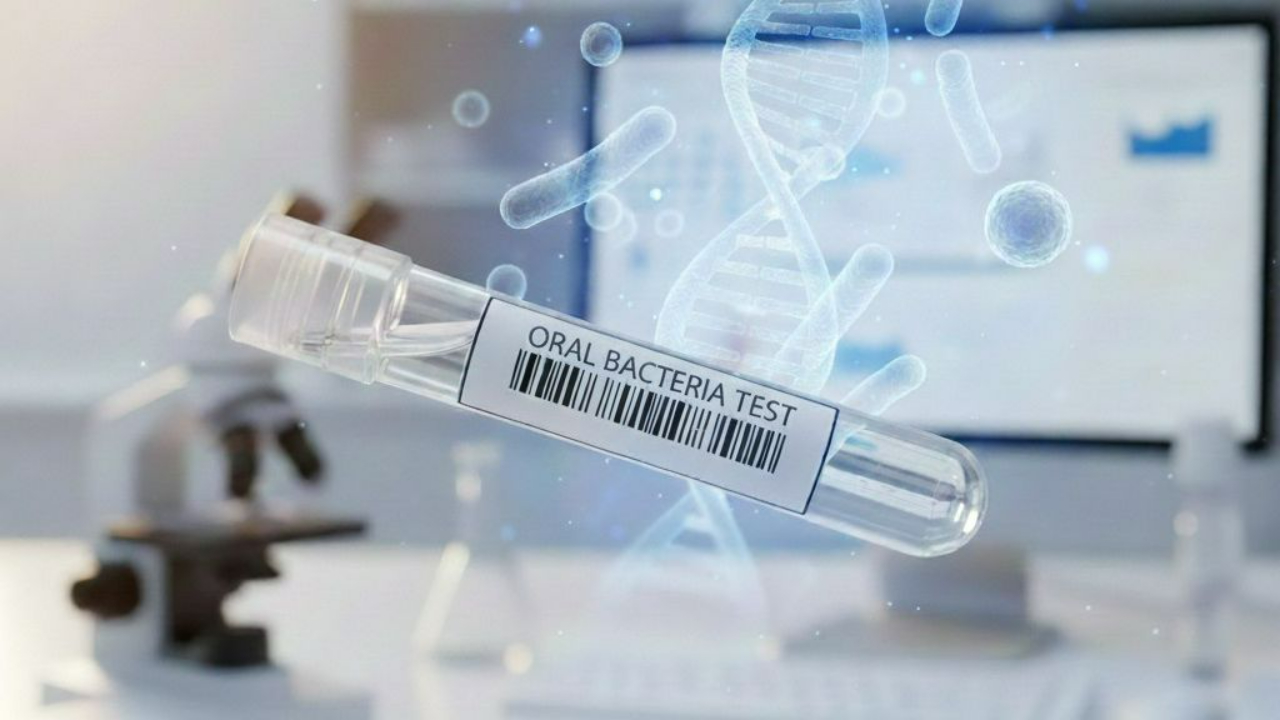
Oral bacteria testing reveals hidden pathogens that standard dental exams miss — and their impact reaches far beyond your mouth
When Mary joined one of our programs complaining of chronic fatigue and unexplained inflammation, her previous doctors had run every test imaginable.
Nothing showed up. Her dentist had given her a clean bill of health just months before.
Yet something was clearly wrong.
The breakthrough came when she got comprehensive oral bacteria testing.
The results revealed dangerously high levels of Porphyromonas gingivalis — a pathogen linked to systemic inflammation¹,²,³ and cardiovascular disease¹,⁴,⁵.
In this article, you'll discover exactly which dangerous oral pathogens could be hiding in your mouth right now, how oral bacteria testing identifies them with precision, and why this test could finally explain the chronic health issues that have puzzled your doctors.
The reality is sobering: You swallow between 150 billion to 1 trillion bacteria from your mouth every single day — and if the wrong ones have taken up residence, they're traveling directly to your heart, brain, and gut with every swallow.
Discover How Your Mouth Affects Your Entire Body
Start your FREE 10-day screening of the Gateway to Health documentary series
Watch Now →🔬 See the science behind the oral-systemic connection
Key Takeaways
- Oral bacteria testing uses advanced DNA sequencing to identify specific pathogenic bacteria that conventional dental exams can't detect.
- Four major oral pathogens — P. gingivalis, Fusobacterium nucleatum, Aggregatibacter actinomycetemcomitans, and Tannerella forsythia—are directly linked to heart disease, Alzheimer's, diabetes, and chronic inflammation²⁻⁶,⁹,¹¹,¹²,¹⁵⁻¹⁷.
- Standard dental checkups focus on cavities and gum disease but miss the bacterial populations driving systemic health problems.
- The testing process is simple: a saliva or plaque sample analyzed through PCR (polymerase chain reaction) technology — a DNA analysis method that identifies specific bacteria — reveals exact bacterial loads and diversity scores.
- Knowing your specific oral pathogens enables targeted antimicrobial protocols instead of generic treatments.
- Testing is essential because you can have dangerous bacterial overgrowth without visible gum disease symptoms.
- Oral microbiome testing is the foundation for addressing root causes of chronic illness that originate in the mouth.
Which Bacteria Are Living in Your Mouth Right Now?
Get comprehensive oral microbiome testing with expert interpretation
Get Tested →🔬 DNA analysis reveals pathogens your dentist can't see
What Your Dentist Can't See
Here's what most people don't realize: your regular dental checkup is designed to catch cavities, measure pocket depths, and check for visible gum inflammation.
These are important, but they only scratch the surface.
What's happening beneath the gum line at the bacterial level? Your dentist has no way of knowing without specialized testing.
Think of it this way — a standard dental exam is like checking if your car's exterior looks clean.
Oral pathogen testing is like opening the hood to see if the engine is actually running properly.
Both matter, but they tell you completely different stories.
The bacteria causing the most damage often operate silently for years.
By the time you have bleeding gums or loose teeth, they've already established colonies in your bloodstream and are affecting organs far from your mouth.¹
This is where oral microbiome testing becomes essential.
The Four Pathogens You Need to Know About
When we run comprehensive oral bacteria testing, we're looking for specific culprits that research has directly linked to systemic disease.
Let me introduce you to the four most dangerous residents that might be living in your mouth right now.
Porphyromonas gingivalis: The Heart Attack Bacteria
This pathogen isn't just associated with gum disease — it's been found living inside the heart valves of patients with cardiovascular disease.²
Research shows P. gingivalis can invade and multiply within the cells lining your blood vessels, directly contributing to atherosclerotic plaque formation.³
Studies have documented this bacteria's DNA in thrombus specimens from people who suffered acute myocardial infarction.⁴
When researchers infected mice with P. gingivalis, they observed significantly increased mortality from cardiac rupture.⁵
Fusobacterium nucleatum: The Silent Invader
F. nucleatum accelerates atherosclerosis through macrophage-driven inflammation and disrupted lipid metabolism.⁶
This pathogen can survive for extended periods after invading host cells — providing sufficient time to evade your immune system and spread systemically.⁷
Animal studies show oral infection with F. nucleatum substantially increases atherosclerotic lesion progression and changes plaque composition into a less-stable, more dangerous phenotype.⁸
Aggregatibacter actinomycetemcomitans: The Immune Evader
This bacteria possesses leukotoxin — a protein toxin that specifically targets and destroys your white blood cells, helping it evade immune detection.⁹
Research demonstrates that systemic infection with A. actinomycetemcomitans accelerates atherosclerosis by triggering widespread inflammation.¹⁰
Clinical studies have found that patients harboring this pathogen showed significantly higher levels in those with both acute and stable coronary artery disease compared to healthy individuals.¹¹
Tannerella forsythia: The Cholesterol Disruptor
T. forsythia significantly increases serum lipoproteins, suggesting altered cholesterol metabolism that fuels aortic inflammation.¹²
This pathogen works synergistically with other oral bacteria to enhance systemic inflammatory burden.¹³
Research shows T. forsythia infection increases cardiovascular disease risk factors including elevated C-reactive protein and reduced nitric oxide — markers of vascular dysfunction.¹⁴
The connection between these oral pathogens and chronic disease isn't speculation — it's documented in peer-reviewed medical literature.
See How These Pathogens Travel From Mouth to Heart
Watch the Gateway to Health documentary series — FREE 10-day screening
Start Watching →🎓 Learn from leading experts in functional dentistry
How Oral Bacteria Testing Actually Works
The testing process is refreshingly simple, especially compared to the potential health impact.
Sample Collection
The testing kit arrives at your home with simple instructions.
You collect a saliva or plaque sample — typically just a swab of your gums and tongue.
The entire collection process takes under five minutes, and you mail the sample back to the lab in the prepaid envelope.
Laboratory Analysis
The sample goes through bacterial DNA sequencing using PCR (polymerase chain reaction) technology.
This identifies specific bacterial strains present in your mouth, quantifies their populations, and assesses overall microbial diversity.
Comprehensive Reporting
Within 2-3 weeks, you receive a detailed report showing:
- Exact bacterial species identified
- Population levels of pathogenic bacteria
- Diversity scores indicating ecosystem balance
- Comparison to healthy baseline ranges
Professional Interpretation
A licensed oral health professional reviews your results with you during a virtual consultation, explaining which pathogens are present at concerning levels and what they mean for your systemic health risk.
This isn't guesswork.
You're getting precise data about the bacterial ecosystem in your mouth — information that fundamentally changes how you can address chronic health issues.
Know Your Numbers: Get Your Bacterial Profile
At-home oral microbiome testing with virtual professional consultation
Order Your Test →✅ Simple at-home sample • Results in 2-3 weeks
Reading Your Results: What the Numbers Mean
When your oral pathogen testing results come back, you'll see several key metrics. Here's what actually matters:
Bacterial Load
This shows the quantity of specific pathogens.
For example, high levels of P. gingivalis or F. nucleatum indicate active infection requiring intervention, even if you don't have obvious gum disease symptoms.
Diversity Scores
A healthy oral microbiome has balanced diversity. Low diversity often correlates with pathogenic overgrowth — a few harmful bacteria have crowded out beneficial species.
Pathogenic Presence
The report flags which dangerous bacteria are present and at what concentrations.
Finding A. actinomycetemcomitans or T. forsythia warrants immediate attention given their systemic health implications.
The difference between someone with optimal oral health and someone headed toward cardiovascular disease often shows up first in these bacterial profiles — years before symptoms appear.
Early participants in our testing program have experienced this precision firsthand.
One woman's test revealed concerning levels of P. gingivalis despite having no visible gum problems.
Armed with this data, she began a targeted protocol.
Within months, follow-up testing showed her bacterial profile normalizing — potentially preventing the cardiovascular complications that had affected multiple family members.
Targeted Treatment Based on Your Results
Generic mouthwash and flossing harder won't solve pathogenic bacterial overgrowth.
That's like trying to treat a specific bacterial infection with chicken soup — nice, but not nearly precise enough.
Once oral bacteria testing identifies your specific pathogens, you receive a personalized protocol designed to target those exact bacteria.
This might include:
Specific Antimicrobial Rinses: Prescribed formulations that target the bacteria in your results, not just "general oral care."
Probiotic Supplementation: Beneficial bacteria strains that compete with and crowd out the pathogens identified in your test.
Dietary Modifications: Eliminating foods that feed pathogenic bacteria while supporting beneficial species.
Professional Dental Coordination: Guidance on targeted interventions to discuss with your dentist, such as specialized scaling and root planing or ozone therapy based on your bacterial profile.
The oral-systemic connection means treating these pathogens isn't just about saving your teeth — it's about protecting your heart, brain, and overall longevity.
Why Testing Matters Even Without Symptoms
Here's what surprises most people:
You can have dangerous pathogenic overgrowth without bleeding gums, without bad breath, without any obvious signs of trouble.
Remember Mary from the beginning of this article?
Her dentist found nothing wrong. Standard examination showed healthy-looking gums.
But the bacterial DNA analysis revealed a completely different story — one that explained her mysterious systemic inflammation.
Oral pathogens often operate silently for years before causing visible damage in your mouth.
Meanwhile, they're constantly entering your bloodstream and affecting distant organs.
Think of it like high cholesterol or high blood pressure — conditions that cause serious damage long before you feel anything wrong.
By the time symptoms appear, significant harm has already occurred.
Testing gives you the information you need to intervene early, before these bacteria cause irreversible damage to your cardiovascular system, brain, or metabolic health.
Don't Wait for Symptoms to Appear
Identify dangerous pathogens before they cause irreversible damage
Test Now →🛡️ Prevention is protection — catch silent threats early
The Bigger Picture: Oral Health Is Whole-Body Health
The mouth isn't separate from the rest of your body — it's the gateway.
Every time you swallow, oral bacteria travel from your mouth into your digestive tract and bloodstream.¹⁸
People swallow approximately 600 times per day, and with each swallow, saliva containing resident oral bacteria moves through the gastrointestinal system.¹⁸
If those bacteria include P. gingivalis, they're hitching a ride to your heart valves.
If they include F. nucleatum, they're contributing to atherosclerotic plaque formation.
If they include A. actinomycetemcomitans, they're evading your immune system and triggering systemic inflammation.
Standard dentistry focuses on maintaining tooth and gum tissue health.
That's essential, but it misses the bacterial dimension that drives chronic disease.
Functional oral health — the approach we take at Gateway to Health — recognizes that optimizing your oral microbiome is fundamental to preventing the chronic diseases that plague modern society.
This is why we created the comprehensive Orobiome Test package — with at-home testing and virtual consultation — because people deserve to know exactly which bacteria are in their mouths and what that means for their long-term health.
Your Next Step
If you're experiencing unexplained inflammation, cardiovascular concerns, brain fog, or any chronic condition your doctors can't fully explain, oral bacteria testing should be on your radar.
You don't need to wonder whether dangerous pathogens are silently damaging your health.
You can know with certainty.
The testing process is simple. The insights are profound.
And the interventions — when based on your specific bacterial profile — actually work because they're targeting the root cause instead of just managing symptoms.
Take Control of Your Health at the Root Cause
Comprehensive oral microbiome testing + personalized protocol
Begin Your Journey →💪 Stop guessing, start knowing — your personalized path to optimal health

Sources
- Invasion of aortic and heart endothelial cells by Porphyromonas gingivalis. Infect Immun. 1998.
- Detection of oral bacteria in cardiovascular specimens. Oral Microbiol Immunol. 2009.
- Porphyromonas gingivalis in Alzheimer's disease brains: Evidence for disease causation and treatment with small-molecule inhibitors. Sci Adv. 2019.
- The link between different infection forms of Porphyromonas gingivalis and acute myocardial infarction: a cross-sectional study. BMC Oral Health. 2023.
- Porphyromonas gingivalis, a periodontal pathogen, enhances myocardial vulnerability, thereby promoting post-infarct cardiac rupture. J Mol Cell Cardiol. 2016.
- Fusobacterium nucleatum accelerates atherosclerosis via macrophage-driven aberrant proinflammatory response and lipid metabolism. Front Microbiol. 2022.
- Fusobacterium nucleatum: a commensal-turned pathogen. Curr Opin Microbiol. 2015.
- Fusobacterium nucleatum exacerbates atherosclerosis progression via ceRNA network-mediated epigenetic reprogramming. Genomics. 2025.
- Serum antibody levels to Actinobacillus actinomycetemcomitans predict the risk for coronary heart disease. Arterioscler Thromb Vasc Biol. 2005.
- Aggregatibacter actinomycetemcomitans accelerates atherosclerosis with an increase in atherogenic factors in spontaneously hyperlipidemic mice. FEMS Immunology & Medical Microbiology. 2010.
- A common periodontal pathogen has an adverse association with both acute and stable coronary artery disease. Atherosclerosis. 2012.
- Chronic oral infection with major periodontal bacteria Tannerella forsythia modulates systemic atherosclerosis risk factors and inflammatory markers. Pathog Dis. 2015.
- The intriguing strategies of Tannerella forsythia's host interaction. Frontiers in Oral Health. 2024.
- Tannerella forsythia BspA increases the risk factors for atherosclerosis in ApoE(-/-) mice. Oral Diseases. 2013.
- High incidence of Aggregatibacter actinomycetemcomitans infection in patients with cerebral infarction and diabetic renal failure: a cross-sectional study. BMC Infect Dis. 2013.
- Aggregatibacter actinomycetemcomitans infection enhances apoptosis in vivo through a caspase-3-dependent mechanism in experimental periodontitis. Infect Immun. 2012.
- Occurrence of red complex microorganisms and Aggregatibacter actinomycetemcomitans in patients with diabetes. J Investig Clin Dent. 2013.
- The bacterial connection between the oral cavity and the gut diseases. J Dent Res. 2020.