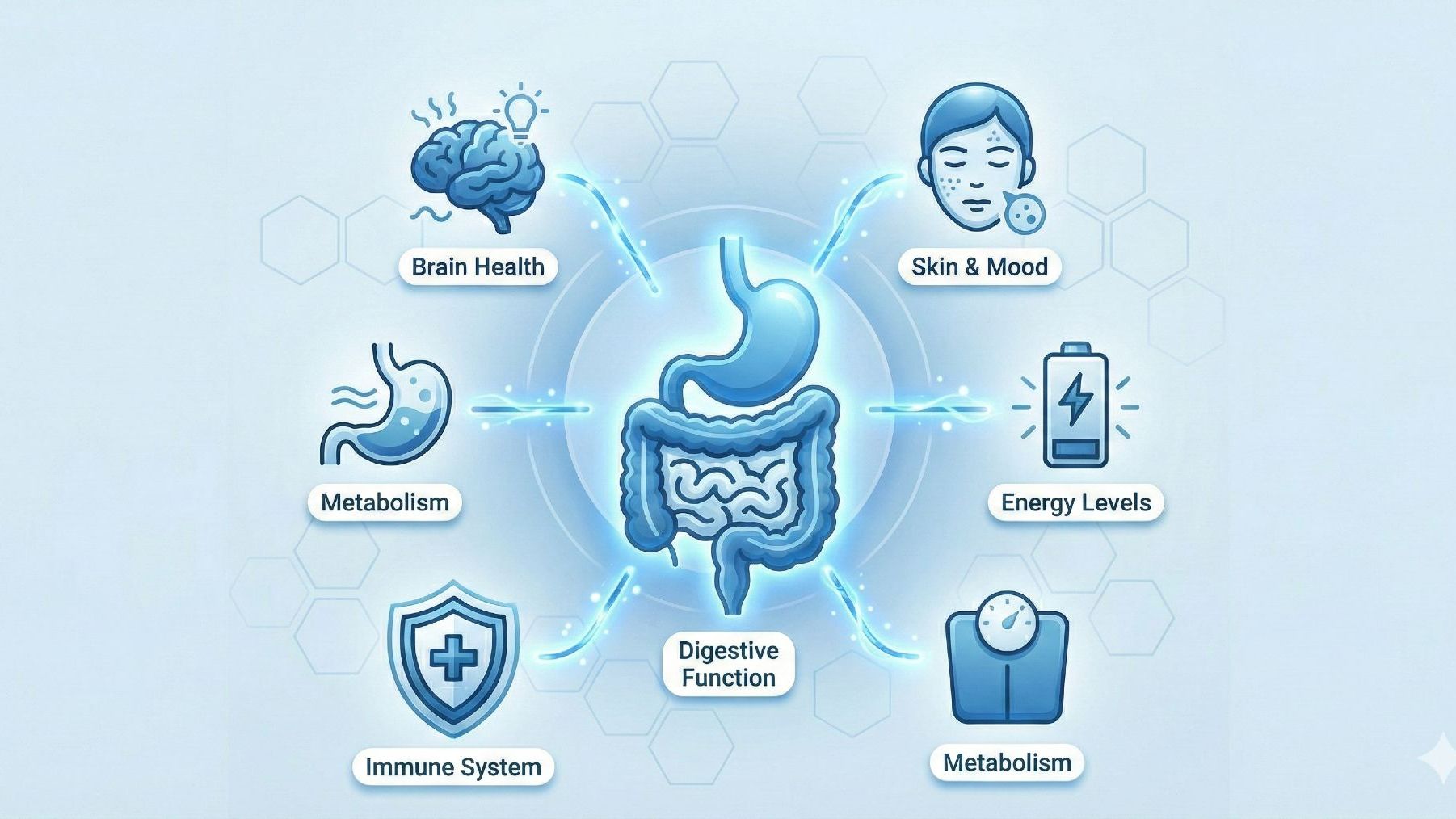
Gut dysbiosis symptoms reveal why your seemingly unrelated health issues are actually connected
Your body's been trying to tell you something. The afternoon brain fog. The bloating after meals. The skin breakouts no cream fixes. The exhaustion coffee can't touch.
You've probably mentioned these symptoms to specialists who each focused on their area of expertise — digestive health, dermatology, mental health. Each treated symptoms separately.
But what if these issues share a common root? Gut dysbiosis symptoms rarely travel alone.
In this article, you'll discover how seemingly unrelated health complaints stem from the same root — an imbalanced gut microbiome.
More importantly, you'll learn what comprehensive testing reveals and why guessing with random probiotics wastes both time and money.
Keep reading for information that could finally explain why you've been feeling this way.
Key Takeaways
- Gut dysbiosis affects the majority of people with chronic health complaints, yet conventional medicine often misses the connection between symptoms.
- Common signs include digestive issues, brain fog, chronic fatigue, skin problems, mood changes, and unexplained weight gain.
- Your oral bacteria directly impact your gut health — you swallow up to 1 trillion bacteria daily from your mouth.¹²
- Antibiotics, processed foods, chronic stress, and environmental toxins are primary triggers.¹⁰,¹¹,¹⁶,¹⁷,¹⁸
- Comprehensive gut testing reveals bacterial imbalances, inflammation markers, food sensitivities, and gut barrier function driving your symptoms.
- Targeted protocols based on actual test results work better than generic supplement guessing.
- Restoration typically takes 3-6 months with proper testing and guidance.
What Your Symptoms Are Actually Telling You
I've worked with thousands of patients over two decades.
Many arrive after seeing multiple specialists, each addressing individual symptoms without connecting the broader pattern.
One patient came to me experiencing what appeared to be unrelated problems — digestive issues, anxiety, eczema, joint pain, brain fog.
Her previous care focused on managing each symptom individually.
Her gut test revealed the connection: severe dysbiosis with overgrowth of pathogenic bacteria, depleted beneficial species, compromised gut barrier function.
Once we addressed this root cause, those "separate" symptoms improved together.
That's the thing about the signs of gut dysbiosis — they cascade through multiple systems because your gut microbiome produces neurotransmitters, regulates immunity, influences hormones, and maintains your gut lining integrity.²
When this ecosystem gets disrupted, the effects ripple outward.
The Wide-Reaching Impact You Didn't Expect
Let's talk about what microbiome imbalance symptoms actually look like.
Digestive Issues are the obvious ones — bloating, gas, constipation, diarrhea, or both.
Food intolerances multiply over time as dysbiosis increases intestinal permeability, making your immune system more reactive.³
Brain Fog and Mood Changes surprise people most.
Over 90% of your body's serotonin is produced in your gut, not your brain.⁴
When gut bacteria are imbalanced, neurotransmitter production gets disrupted, showing up as brain fog, anxiety, depression, or unexplained mood swings.
Research consistently links gut dysbiosis to mental health issues.⁵
Chronic Fatigue that caffeine can't touch happens because gut inflammation triggers systemic inflammation — your body constantly runs in low-grade emergency mode,⁶ which makes you feel like you’re always exhausted.
The Dysbiosis Symptom Map
When gut bacteria are imbalanced, symptoms cascade across multiple systems
💡 These symptoms often appear unrelated — but they share a common root in your gut microbiome
Skin Problems like acne, eczema, and psoriasis improve when we fix the gut. The gut-skin axis is well-established.⁷
Harmful bacteria trigger inflammation that manifests on your skin. Topical treatments fail because they're not addressing the source.
Weight and Metabolism Issues — unexplained weight gain or inability to lose weight — stem from gut bacteria that extract calories differently and influence how your body stores fat and regulates blood sugar.⁸
Immune Dysfunction including frequent infections and worsening allergies reflects the fact that 70-80% of your immune cells reside in gut-associated lymphoid tissue.⁹
Dysbiosis creates either overactive responses (allergies, autoimmunity) or underactive ones (frequent infections).
Understanding these connections is the first step toward fixing the problem.
What's Actually Causing This
Antibiotics are the most common culprit.
They wipe out beneficial bacteria along with harmful ones — a single course can disrupt your microbiome for months.¹⁰ Multiple courses compound the damage.
Diet matters enormously.
Processed foods, refined sugar, and industrial oils feed the wrong bacteria while insufficient fiber starves the beneficial species that produce gut-healing short-chain fatty acids.¹⁶, ¹⁷
Common Dysbiosis Triggers
What disrupts your gut microbiome balance
💡 Multiple triggers compound the damage—testing reveals which factors are affecting YOUR gut
Chronic stress isn't just mental.
Cortisol directly impacts gut barrier function and alters bacterial composition.¹¹ The gut-brain connection works both ways.
Environmental toxins and pesticide residues can disrupt gut bacterial balance.¹⁸ NSAIDs and other medications damage the gut lining with repeated use.
And here's what most people often miss: your oral bacteria directly impact your gut health.
The Oral-Gut Highway
Every swallow sends bacteria from your mouth directly to your gut
Home to 700+ bacterial species
Up to 1 TRILLION bacteria travel from mouth to gut
Oral bacteria colonize and influence gut microbiome balance
You swallow 600-1,000 times daily, sending potentially up to 1 trillion bacteria from your mouth to your gut.¹²
Pathogenic oral bacteria like Porphyromonas gingivalis and Fusobacterium nucleatum colonize your gut, promote inflammation, and disrupt microbiome balance.¹³
Bleeding gums and chronic bad breath aren't just dental issues — they're whole-body health warnings.
Stop Guessing, Start Testing
Many people try addressing gut issues by experimenting with probiotics, eliminating foods, and trying various supplements — all based on educated guesses rather than data.
This approach can work, but it's time-consuming and expensive. Testing provides clarity.
Comprehensive gut testing shows you exactly what's happening:
- which pathogenic bacteria are overgrown,
- which beneficial species are depleted,
- markers of inflammation,
- digestive enzyme function,
- and whether your gut barrier is compromised.
This isn't vague guesswork. It's specific data about YOUR microbiome.
What Comprehensive Gut Testing Reveals
Stop guessing. Get precise data about YOUR microbiome.
From there, you can build a targeted protocol instead of throwing supplements at the wall hoping something sticks.
Get comprehensive gut testing here and stop guessing about what's wrong.
How to Actually Fix This
Dysbiosis treatment requires a systematic approach, not quick fixes.
Remove triggers — identify what's causing the problem through testing, whether specific foods, ongoing medication use, or inflammatory dietary patterns.
Support digestion with enzymes, HCl, or bile support depending on your test results. Many people with dysbiosis have compromised digestive function.
Rebuild beneficial bacteria with specific strains targeted to YOUR needs — not random probiotics.
Different bacterial species address brain fog, inflammation, or barrier repair. Testing shows which ones you actually need.
Repair the gut lining with L-glutamine, zinc carnosine, and other nutrients. This works better when you know your actual gut barrier status.¹⁵
Manage stress because chronic cortisol keeps damaging your gut lining regardless of supplements.
Stress management through meditation, breathwork, and nervous system regulation isn't optional — it's essential.
And here’s some real talk: restoration takes 3-6 months of consistent work. Anyone promising a 7-day gut reset is selling something that won't last.
Your Next Steps
If you recognize yourself in these symptoms, understand that your body is communicating important information about what it needs.
The question becomes: will you continue addressing symptoms individually, or investigate the underlying cause?
Gut dysbiosis is measurable, testable, and reversible with the right approach — one based on data rather than trial and error.
Testing provides clear information about what's happening in your gut, allowing for targeted protocols rather than generic approaches.
Your symptoms are connected. Your solution should be too.

Sources
- Understanding dysbiosis and resilience in the human gut microbiome: biomarkers, interventions, and challenges. Frontiers in Microbiology. 2025.
- Gut Microbiota Dysbiosis: Pathogenesis, Diseases, Prevention, and Therapy. MedComm. 2025.
- Gut dysbiosis: Ecological causes and causative effects on human disease. PNAS. 2023.
- Gut microbes promote colonic serotonin production through an effect of short-chain fatty acids on enterochromaffin cells. The FASEB Journal. 2014.
- Gut dysbiosis in severe mental illness and chronic fatigue: a novel trans-diagnostic construct? A systematic review and meta-analysis. Molecular Psychiatry. 2021.
- Gut Microbiota Dysbiosis Associated with Persistent Fatigue in Hematopoietic Cell Transplantation Survivors. Transplantation and Cellular Therapy. 2021.
- Gut–Skin Axis: Current Knowledge of the Interrelationship between Microbial Dysbiosis and Skin Conditions. Microorganisms. 2021.
- The Influence of the Gut Microbiome on Obesity in Adults and the Role of Probiotics, Prebiotics, and Synbiotics for Weight Loss. Preventive Nutrition and Food Science. 2020.
- The Interplay between the Gut Microbiome and the Immune System in the Context of Infectious Diseases throughout Life and the Role of Nutrition in Optimizing Treatment Strategies. Nutrients. 2021.
- Defining Dysbiosis for a Cluster of Chronic Diseases. Scientific Reports. 2019.
- From gut dysbiosis to altered brain function and mental illness: mechanisms and pathways. Molecular Psychiatry. 2016.
- Oral Microbiota in Human Systemic Diseases. International Journal of Oral Science. 2022.
- The oral-gut microbiota axis: a link in cardiometabolic diseases. NPJ Biofilms and Microbes. 2025.
- Microbiome 101: Studying, Analyzing, and Interpreting Gut Microbiome Data for Clinicians. Clinical Gastroenterology & Hepatology. 2019.
- Zinc carnosine, a health food supplement that stabilises small bowel integrity and stimulates gut repair processes. Gut. 2006.
- The Detrimental Impact of Ultra-Processed Foods on the Human Gut Microbiome and Gut Barrier. Nutrients. 2025.
- High Intake of Sugar and the Balance between Pro- and Anti-Inflammatory Gut Bacteria. Nutrients. 2020.
- The Impact of Environmental Chemicals on the Gut Microbiome. Oxford Journal Toxicological Sciences. 2020.