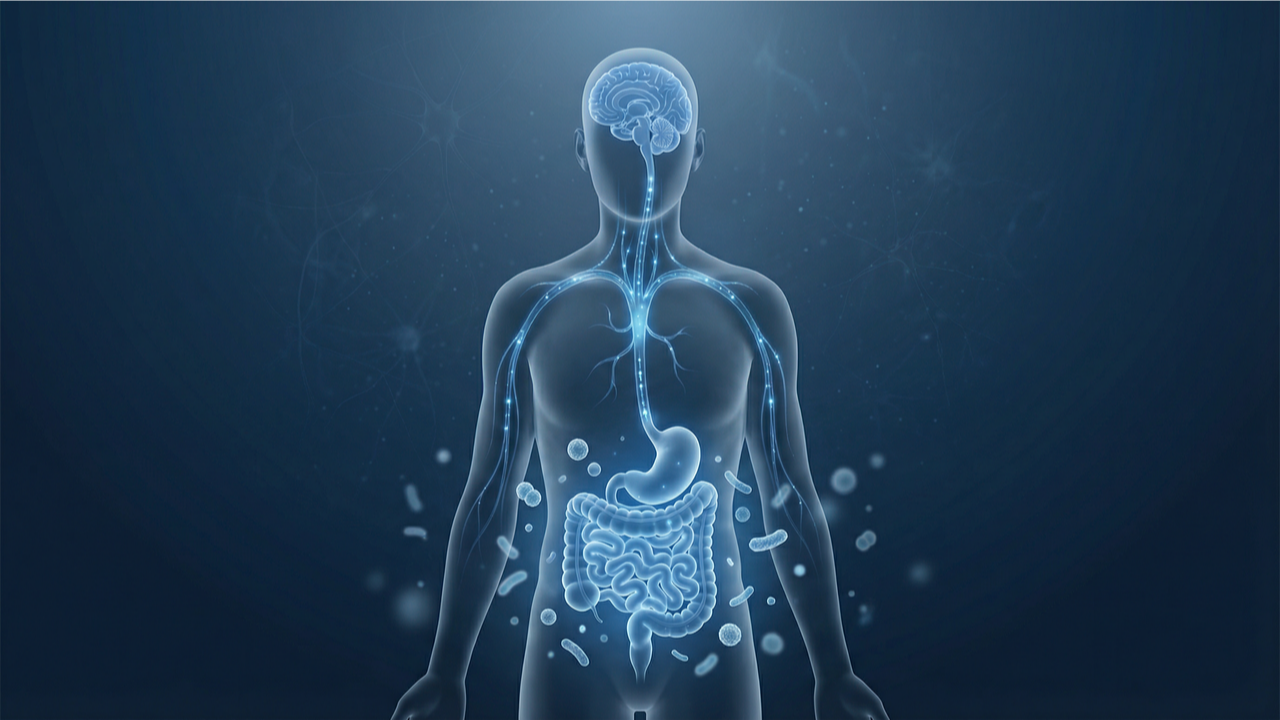
The real reason your gut bacteria and anxiety keep feeding each other — and what to do about it
Here's something I've told patients for years that still surprises people: the anxiety many of us have been fighting might not be starting in the brain at all.
The relationship between gut bacteria and anxiety is one of the most underappreciated — and underdiagnosed — connections in modern health, and it's one I keep coming back to because so many people are still suffering without ever getting this piece of the picture.
In this article, you're going to learn why your intestinal bacteria have a direct hand in regulating your mood, how a compromised gut creates a self-perpetuating cycle of anxious symptoms, and — critically — what you can actually do to break it.
Stick with me to the end; there's a resource near the bottom that has helped a lot of people finally get answers after years of guessing.
Key Takeaways
- Over 90% of the body's serotonin is produced in the gut, largely driven by specific bacterial strains — not in the brain.¹
- Patients with generalized anxiety disorder show measurably different gut microbiome profiles compared to healthy individuals, including reduced microbial diversity.²
- The gut-brain communication runs bidirectionally via the vagus nerve, meaning gut dysfunction can trigger anxiety, and anxiety can worsen gut health.³
- Gut flora imbalances (dysbiosis) reduce SCFA-producing bacteria and allow pro-inflammatory strains to overgrow, directly influencing mood and emotional regulation.²
- Chronic gut inflammation can cause bacterial toxins (LPS) to enter the bloodstream, which are linked to neuroinflammation and symptoms that look like depression and anxiety.⁴
- Gut barrier testing combined with a food sensitivity panel is one of the most actionable ways to identify the specific microbial and immune disruptions driving your symptoms — it's not guesswork, it's data.
- Addressing intestinal health and emotional wellbeing as a unified system — not as separate problems — is the direction functional medicine is heading, and for good reason.
Your gut is running a chemical factory you've never been properly introduced to
Most people learn early in life that serotonin is the "happiness chemical" in the brain.
What most people — including many healthcare providers — don't fully appreciate is that an estimated 90% of the body's serotonin is produced in the gut, primarily driven by specific gut bacteria interacting with intestinal cells.¹
This isn't a minor detail. Serotonin governs far more than mood — it regulates bowel movements, sleep, appetite, and even cognition.
When your gut flora is disrupted, serotonin production takes a hit, and the downstream effects reach well beyond the digestive tract.
The same bacteria also influence GABA, dopamine, and norepinephrine — essentially the whole cast of neurotransmitters involved in regulating how calm or how wired you feel on any given day.⁵
I've watched this play out clinically more times than I can count. Someone comes in frustrated — they've done everything "right" for their anxiety.
They've worked with a good therapist, they've tried meditation, maybe they've even tried medication.
And yet there's this baseline hum of unease that won't quit.
When we dig deeper and look at what's actually happening in the gut, we often find dysbiosis — an imbalance in the gut flora — that has been quietly draining the chemical inputs the nervous system needs to stay regulated.
The loop nobody told you about
Here's where it gets interesting, and a little uncomfortable. The relationship between gut bacteria and anxiety isn't a one-way street. It's a loop.
Anxiety activates the stress response — cortisol rises, the HPA axis fires, and the body's resources get redirected toward perceived threat. This is useful in a genuine emergency.
The problem is that chronic stress and anxiety physically alter the composition of your gut microbiome.⁶
The beneficial, SCFA-producing bacteria that help maintain your gut lining and regulate inflammation begin to decline.
Pro-inflammatory strains move in to fill the gap.
This microbial shift further disrupts neurotransmitter production, increases gut permeability, and allows bacterial toxins — particularly lipopolysaccharides, or LPS — to seep across the gut lining and into circulation.
LPS triggers systemic inflammation, and that inflammation can reach the brain.⁴
The result? More anxiety. More gut dysfunction. And so the loop continues.
You can learn more about how this plays out neurologically in The Gut-Brain Connection That Controls Your Mood — it's worth a deep read if you've never explored how intricately these two systems speak to each other.
This bidirectional nature of the problem is also why gut health and depression symptoms so often appear together.
In research examining patients with generalized anxiety disorder (GAD), scientists found markedly reduced microbial diversity, lower levels of short-chain fatty acid-producing bacteria, and an overgrowth of inflammatory strains like Escherichia-Shigella and Fusobacterium — changes that were still present even after symptoms went into remission.²
The gut had been altered in ways that outlasted the acute anxiety episode itself.
The vagus nerve is the highway between them
If you want to understand how the gut and brain actually talk to each other in real time, the answer is largely: the vagus nerve.
The vagus nerve is the longest cranial nerve in the body, and it's a mixed nerve composed of approximately 80% afferent (sensory) fibers and 20% efferent (motor) fibers — meaning the vast majority of its signals travel to the brain, carrying information from organs including the gut, heart, and lungs.³
When your gut bacteria produce signaling molecules — including serotonin and short-chain fatty acids — those signals travel up the vagus nerve and influence how your brain processes threat, safety, and mood.⁷
Disrupted vagal signaling has been associated with increased anxiety-like behaviors, impaired fear extinction (your ability to move past a stressor once it's resolved), and blunted stress resilience.⁸
Conversely, improving vagal tone appears to modulate monoaminergic systems in the brainstem that play a central role in anxiety and mood disorders.⁸
This is why practices that stimulate the vagus nerve — like meditation, certain breathing techniques, and deliberate relaxation — can produce real results for anxiety.
You're essentially strengthening the communication pathway between your gut and brain.
You can also read more about the research behind this in Vagus Nerve Stimulation Benefits for Anxiety and Gut Health.
Why standard anxiety treatment alone often falls short
I want to be careful here, because I have enormous respect for the work therapists, psychiatrists, and primary care physicians do.
Mental health treatment is critically important, and I'd never encourage anyone to abandon the care they're receiving.
What I will say is this: conventional mental health treatment was largely designed around the brain and the mind.
It wasn't built with the gut-brain axis in mind, because that science is relatively new.
Cognitive behavioral therapy, SSRIs, and anxiolytics are valuable tools — but they're tools aimed at symptoms, not at the microbial imbalances or gut barrier disruption that may be generating those symptoms in the first place.
Research confirms that at least 30% of people with depression don't respond adequately to conventional antidepressant treatments — and anxiety disorders are even more likely to co-occur in those same treatment-resistant cases.⁹
That's not a small number.
And while anxiety and depression are distinct conditions, they share significant overlap in their gut-microbiome signatures, suggesting a common biological thread that standard pharmacology doesn't address.⁴
Think of it this way: if the anxiety is partly a signal from your gut that something is wrong down there, treating only the brain is like turning off the fire alarm without looking for the fire.
If you're wondering whether your gut might be contributing to your symptoms, this piece on gut testing for anxiety breaks down exactly what markers to look for — it's one of the most practical reads I'd point someone toward.
What signs suggest your gut bacteria might be out of balance
Some signs are obvious — chronic bloating, irregular bowel movements, food sensitivities that seem to multiply over time.
But gut flora imbalances often show up in ways people never connect back to the digestive system, including:
- Persistent low-grade anxiety that feels like a "baseline" rather than a response to actual stressors
- Brain fog, especially after meals (more on this at Brain Fog and Anxiety: Your Gut May Be the Culprit)
- Mood swings that seem to track with digestion or eating patterns
- Fatigue that isn't explained by sleep quality
- Heightened reactivity to stressors that you previously handled well
- Recurring gut discomfort without a clear cause
The challenge is that these symptoms are non-specific.
A doctor running standard bloodwork is unlikely to find anything actionable. That's not a failure of the doctor — it's a gap in what conventional testing is designed to detect.
The mouth matters too — and it connects back to the gut
One thing worth mentioning: the gut microbiome doesn't exist in isolation.
Every single day, somewhere between 150 billion and 1 trillion bacteria travel from your mouth into your gut when you swallow.¹⁰
That means the health of your oral microbiome directly seeds and influences your intestinal bacteria.
If your oral microbiome is out of balance — something that often shows up as bleeding gums or persistent bad breath — you're continuously sending pro-inflammatory bacteria downstream into an environment that's supposed to support your mood and mental wellness.
This oral-gut-brain pipeline is something most people have never considered, and the Gateway to Health documentary series covers it in extraordinary depth.
And if oral health feels like it might be part of your picture, the Orobiome Test gives you a comprehensive look at what's living in your oral microbiome.
How to actually start breaking the cycle
The research points toward a multi-layered approach, and I won't pretend there's a single pill or protocol that resolves this overnight.
Here's how I think about it:
Test before you guess.
The single most useful thing you can do is get comprehensive gut testing done before adding supplements, changing your diet dramatically, or starting a new protocol.
Without data, you're working blind.
Food sensitivities in particular are highly individual — what disrupts one person's gut-brain axis may be completely fine for another.
The KBMO gut barrier panel and food sensitivity test is built specifically for this.
Support the vagus nerve.
Practices like slow diaphragmatic breathing, meditation, yoga, and mindfulness all measurably improve vagal tone.⁸
If you want a more direct tool, the VIBE device uses PEMF technology to support vagal stimulation passively — I keep one on my desk.
Address diet and lifestyle systematically.
Prebiotic fiber, fermented foods, and reducing ultra-processed foods all support healthy microbiome diversity.
If you want the full science behind this — including the specific strains and foods involved — the Interconnected series goes deep on this across nine episodes with contributions from over 70 researchers and physicians.
Reduce the stress load.
I know this feels circular, but the stress-gut-anxiety loop runs in both directions.
Even small reductions in chronic stress exposure can measurably shift microbiome composition over time.⁶
Gratitude practices, sleep optimization, and consistent movement all help.
The bottom line
The gut bacteria and anxiety relationship is real, it's bidirectional, and it's one of the most important areas of emerging research in mental health today.
This isn't about dismissing the psychological or neurological dimensions of anxiety — it's about completing the picture.
If you've been doing the work and you're still struggling, it might be time to look at what's happening in your gut.
The data is there — you just need the right test to surface it.
Start with the KBMO Gut Barrier + Food Sensitivity Panel. It's the clearest window I know of into the biological terrain that's driving your symptoms.
And if you haven't yet watched the Interconnected series, register now for the limited-time free screening — it'll change how you think about your body.

Sources
- Indigenous Bacteria from the Gut Microbiota Regulate Host Serotonin Biosynthesis. California Institute of Technology / Caltech News. 2015
- Altered gut microbiota profile in patients with generalized anxiety disorder. Journal of Psychiatric Research. 2018.
- The Vagus Nerve at the Interface of the Microbiota-Gut-Brain Axis. Frontiers in Neuroscience. 2018.
- Gut microbiota in anxiety and depression: Pathogenesis and therapeutics. Frontiers in Gastroenterology. 2022.
- Neurotransmitter modulation by the gut microbiota. Brain Research. 2018.
- The Gut Microbiome and Mental Health: Implications for Anxiety- and Trauma-Related Disorders. OMICS: A Journal of Integrative Biology. 2018.
- Interaction of the Vagus Nerve and Serotonin in the Gut-Brain Axis. International Journal of Molecular Sciences. 2025.
- Vagus Nerve as Modulator of the Brain-Gut Axis in Psychiatric and Inflammatory Disorders. Frontiers in Psychiatry. 2018.
- Treatment-resistant depression: definition, prevalence, detection, management, and investigational interventions. World Psychiatry. 2023.
- Shojai P. Heal Your Mouth. Heal Your Body. Gateway to Health — Healing Secrets of the Oral Biome. Urban Monk Productions, 2023.