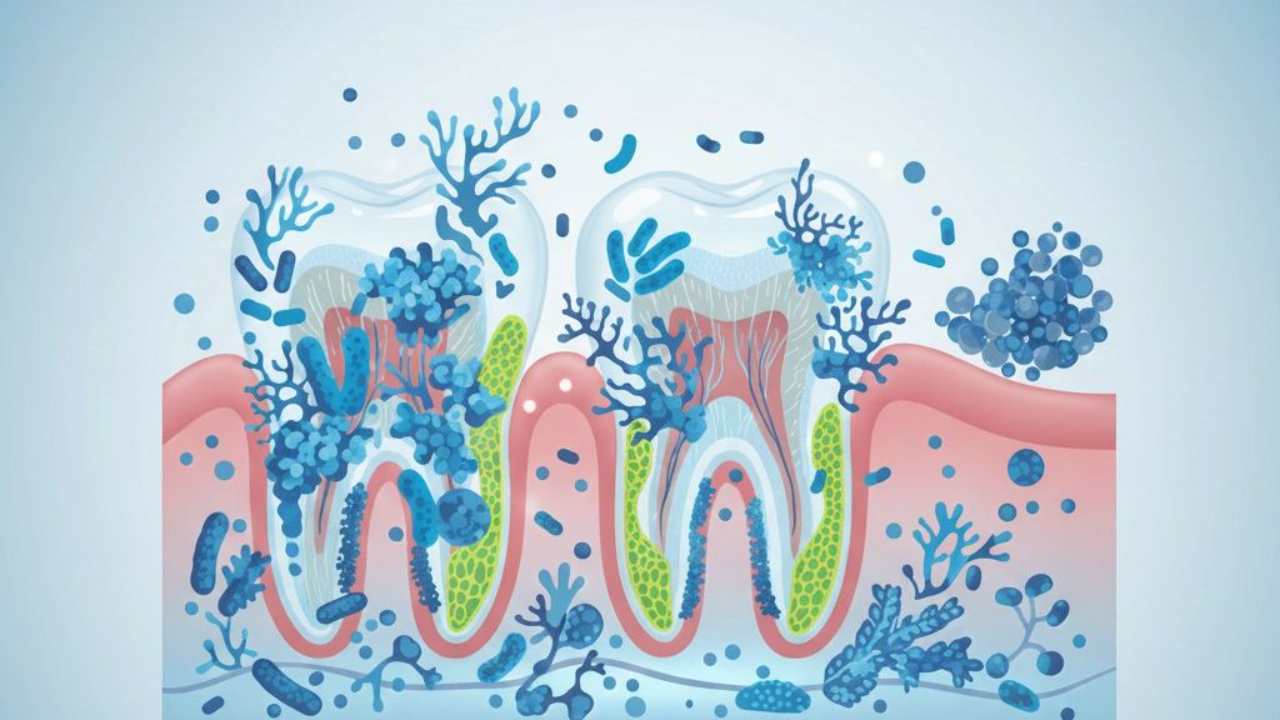
700+ Bacteria in Your Oral Microbiome Are Either Protecting Your Health or Destroying It — Here's How to Support the Right Ones
Here's something that might surprise you: you're swallowing about a trillion bacteria every single day.¹
These microscopic passengers don't just disappear — they travel directly into your bloodstream, your gut, and throughout your entire body.
The question isn't whether you're swallowing bacteria (you absolutely are), but rather: are they the right kind?
Your oral microbiome houses over 700 different bacterial species,² each playing a distinct role in either supporting your health or silently undermining it.
For decades, the focus in dentistry was on eliminating bacteria — stronger brushing, antimicrobial mouthwashes, and antibiotics when needed.
But here's what I've learned in my 18+ years of practice: we now understand that this approach can inadvertently harm the beneficial bacteria we actually need to protect us.
In this article, you'll discover why balance beats sterility when it comes to oral health, how to identify signs your mouth ecosystem is out of whack, and practical strategies backed by cutting-edge science to optimize your oral microbiome without destroying the beneficial bacteria that protect you.
The insights I'm sharing could be the breakthrough you've been searching for if you've struggled with bleeding gums, chronic cavities, bad breath, or unexplained fatigue despite doing "everything right."
Key Takeaways
- Your oral microbiome contains over 700 bacterial species that either support or sabotage your health — balance is essential.
- Harsh mouthwashes and aggressive antimicrobials destroy beneficial bacteria along with harmful pathogens, creating worse imbalances.
- Signs of oral dysbiosis include bleeding gums, persistent bad breath, recurring cavities, dry mouth, chronic fatigue, and digestive issues.
- Every swallow sends bacteria from your mouth directly into your gut and bloodstream, affecting cardiovascular, neurological, and immune health.
- Oral microbiome testing reveals your specific bacterial profile, allowing for personalized protocols instead of guesswork.
- Targeted oral probiotics like Lactobacillus reuteri can restore balance when used strategically.
- The oral-gut connection means you cannot fully heal your digestive system without addressing your mouth bacteria.
The Ecosystem Living in Your Mouth
Think of your oral microbiome as a rainforest.
When healthy, it's a thriving, diverse ecosystem where beneficial species keep pathogenic ones in check. When disrupted, harmful bacteria multiply rapidly, creating disease.
Research shows that the oral cavity harbors the second most diverse microbial community in your body, right after your gut.³
These bacteria colonize specific areas — some thrive on teeth surfaces, others prefer your tongue, while different species inhabit your gums, cheeks, and throat.⁴
In a balanced oral microbiome, beneficial bacteria produce substances that naturally suppress harmful pathogens, maintain optimal pH levels, and support your immune system.⁵
They're your first line of defense against infections, inflammation, and systemic disease.
But when this balance shifts — a condition called oral dysbiosis — everything changes.
When Your Mouth Ecosystem Goes Wrong
I see this pattern repeatedly: patients who brush twice daily, floss religiously, and use antibacterial mouthwash still struggle with bleeding gums, cavities, and persistent bad breath.
They're doing everything conventional dentistry recommends, yet nothing improves.
Here's why: they're killing the wrong bacteria.
Signs your oral microbiome is out of balance:
- Bleeding gums when you brush or floss - This isn't normal. It indicates inflammatory bacteria have overgrown and are breaking down gum tissue.⁶
- Chronic bad breath that doesn't go away - Caused by volatile sulfur compounds produced by anaerobic bacteria in an imbalanced mouth.
- Recurring cavities despite good hygiene - Overgrowth of acid-producing bacteria signals severe dysbiosis.
- Dry mouth or reduced saliva - Often signals diminished beneficial bacteria, which help stimulate healthy saliva production.
- Unexplained chronic fatigue - Systemic inflammation from oral pathogens drains your energy and affects sleep quality.⁷
- Digestive problems or food sensitivities - Your mouth bacteria travel directly to your gut with every swallow.
One patient, Jenny, came to me embarrassed by persistent bad breath and bleeding gums.
She'd tried every product on the market. Nothing really worked.
Her comprehensive oral microbiome test revealed extremely low beneficial bacteria and dangerously high levels of pathogenic species.
Within two months of following a personalized protocol, her symptoms disappeared completely.
Learn how oral microbiome testing reveals hidden health threats that traditional dental exams miss.
What Destroys Your Oral Microbiome Balance
Modern lifestyles systematically destroy the delicate microbial balance in your mouth:
Aggressive antimicrobial mouthwashes containing chlorhexidine or alcohol kill beneficial bacteria indiscriminately.⁸
It's like using a flamethrower to remove weeds — you destroy everything, including the plants you want to keep.
Antibiotics wipe out beneficial oral bacteria along with pathogens, creating opportunities for harmful species to colonize.⁹
High-sugar, acidic diets feed pathogenic bacteria while starving beneficial species. These harmful bacteria then produce even more acid, creating a vicious cycle of enamel erosion.¹⁰
Chronic stress alters your mouth's pH and reduces protective saliva flow.¹¹
Mouth breathing (especially during sleep) dries your oral tissues, eliminating the protective saliva barrier that beneficial bacteria need.
Understanding these disruptors is crucial because you can't fix oral dysbiosis by simply brushing harder or using stronger mouthwash.
You need a fundamentally different approach.
How to Improve Your Oral Microbiome Without Destroying It
Here's the functional dentistry approach I use with patients:
Test First, Don't Guess
The most important step is knowing exactly which bacteria populate your mouth.
Comprehensive oral microbiome testing uses cutting-edge bacterial DNA sequencing to identify your specific microbial profile — the beneficial species, the pathogenic ones, and your overall diversity score.
This isn't guesswork. It's precision medicine for your mouth.
With test results, you receive a personalized protocol targeting your specific imbalances.
Testing eliminates the trial-and-error approach that wastes time and money.
Strategic Oral Probiotics
Not all probiotics are created equal, and oral probiotics work very differently than gut probiotics.
Research on Lactobacillus reuteri specifically shows remarkable benefits for gum disease treatment and oral health.
Multiple studies demonstrate that this strain reduces gingival inflammation, decreases bleeding on probing, and inhibits pathogenic bacteria that cause periodontal disease.¹²⁻¹⁴
Other beneficial strains include Lactobacillus salivarius and Streptococcus salivarius K12.¹⁵
These colonize oral tissues, produce antimicrobial substances that suppress pathogens, and help restore healthy pH balance.¹⁵
The key is application: oral probiotics should be chewed or dissolved in your mouth, not swallowed immediately.
They need direct contact with oral tissues to colonize effectively.
Discover the connection between oral health and gut health and why healing one requires addressing both.
pH Optimization and Supportive Care
Your mouth's pH dramatically affects which bacteria thrive.
Beneficial bacteria prefer a slightly alkaline environment, while pathogenic bacteria flourish in acidic conditions.
Natural pH balancers include xylitol, gentle baking soda rinses, and avoiding acidic foods before bed.
Replace harsh antimicrobial products with gentle alternatives like tongue scraping, oil pulling with coconut oil, and hydroxyapatite toothpaste.
How Oral Bacteria Affect Your Heart, Brain, and Gut
The bacteria in your mouth don't stay in your mouth.
Research has definitively linked oral pathogens to cardiovascular disease, Alzheimer's disease, diabetes, pregnancy complications, and autoimmune conditions.¹⁶⁻²⁰
When Michael came to me complaining of chronic fatigue and sleep problems, his doctor found nothing wrong in his labs.
But his oral microbiome test revealed dangerous levels of pathogenic bacteria.
After implementing a targeted protocol, not only did his gums stop bleeding, but he started sleeping through the night for the first time in years. His energy returned.
Read about bleeding gums and their connection to brain and heart health to understand the systemic implications.
This is why I often recommend comprehensive gut testing alongside oral microbiome testing for patients with chronic health issues.
The oral microbiome and gut health are intimately connected — pathogenic oral bacteria can survive stomach acid and colonize your intestines, contributing to inflammatory bowel disease, leaky gut, and systemic inflammation.²¹⁻²²
You cannot fully heal one without addressing the other.
Explore holistic dental care approaches that address root causes instead of just symptoms.
Moving Forward With Your Oral Health
The paradigm is shifting.
We're entering what many experts call "the golden age of dentistry" — where the mouth is finally being “reconnected” to the body, where testing reveals what brushing cannot, and where personalized protocols replace one-size-fits-all approaches.
Your oral microbiome isn't something to fear or destroy. It's an ecosystem to nurture, balance, and support.
The beneficial bacteria living there want to protect you — they just need the right environment to do their job effectively.
If you're experiencing bleeding gums, chronic cavities, persistent bad breath, or unexplained health issues that doctors can't explain, your oral microbiome might be sending you urgent signals.
Don't ignore them.

Sources
- Microbiota of Saliva: A Non-invasive Diagnostic Tool. Indian Journal of Microbiology. 2024.
- British Dental Journal. The oral microbiome—an update for oral healthcare professionals. 2016.
- Journal of Oral and Maxillofacial Pathology. Oral microbiome: Unveiling the fundamentals. 2019.
- Microorganisms. Oral Microbiome: A Review of Its Impact on Oral and Systemic Health. 2024.
- Microorganisms. The Human Oral Microbiome in Health and Disease: From Sequences to Ecosystems. 2020.
- International Journal of Oral Science. Oral microbiota in human systematic diseases. 2022.
- Ewha Medical Journal. Relationship between periodontitis and systemic health conditions: a narrative review. 2025.
- Scientific Reports. Effects of Chlorhexidine mouthwash on the oral microbiome. 2020.
- Microbiology Open. Impact of antibiotics on the human microbiome and consequences for host health. 2022.
- Journal of Lipid Atherosclerosis. Metabolism and Health Impacts of Dietary Sugars. 2022.
- Journal of Oral and Maxillofacial Pathology. Comparison of stress related physiological parameters with biological parameters of saliva among college students - An observational study. 2025.
- Microorganisms. The Impact of Lactobacillus reuteri on Oral and Systemic Health. 2025.
- Swedish Dental Journal. Decreased gum bleeding and reduced gingivitis by the probiotic Lactobacillus reuteri. 2006.
- Microorganisms. Influence of the Probiotic L. reuteri on Periodontal Clinical Parameters. 2023.
- Microorganisms. Streptococcus salivarius and Ligilactobacillus salivarius: Paragons of Probiotic Potential and Reservoirs of Novel Antimicrobials. 2025.
- Diseases. The Systemic Link Between Oral Health and Cardiovascular Disease: Contemporary Evidence, Mechanisms, and Risk Factor Implications. 2025.
- Frontiers in Cellular and Infection Microbiology. Porphyromonas gingivalis-Induced Cognitive Impairment Is Associated With Gut Dysbiosis, Neuroinflammation, and Glymphatic Dysfunction. 2021.
- Diagnostics. The Bidirectional Relationship between Periodontal Disease and Diabetes Mellitus—A Review. 2023.
- Periodontology 2000. Oral bacteria, oral health, and adverse pregnancy outcomes. 2022.
- International Dental Journal. Causal Relationships Between Oral Microbiome And Autoimmune Diseases. 2025.
- Nutrients. The Oral–Gut Microbiota Axis Across the Lifespan: New Insights on a Forgotten Interaction. 2025.
- Gastroenterology Report. The involvement of oral bacteria in inflammatory bowel disease. 2024.