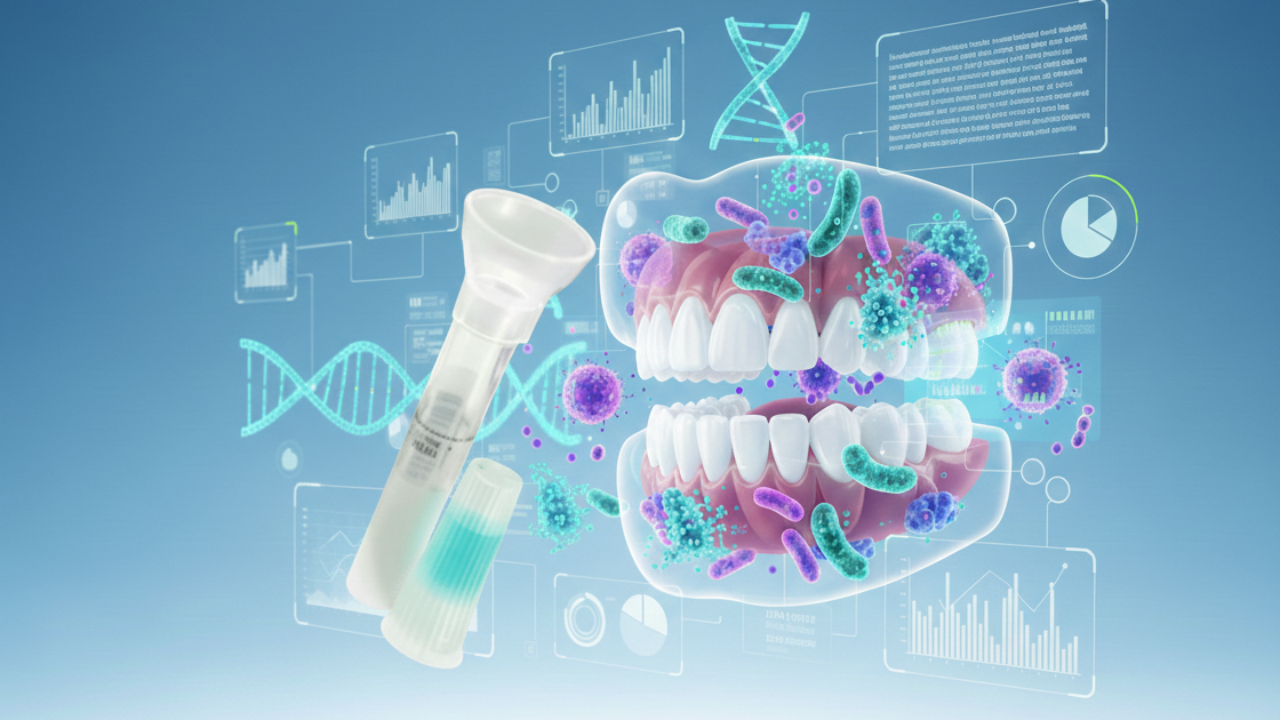
Why personalized dental care is the only approach that works when you've tried everything else and nothing has helped
You brush twice daily. You floss religiously. You see your dentist every six months.
Yet somehow, you're still dealing with bleeding gums, persistent cavities, or chronic bad breath that never fully resolves.
Ever been there?
After 18+ years in dentistry, I've seen this frustration play out more times than I can count. People come to me confused and wondering what they're doing wrong.
Here's what I learned working with Dr. Pedram Shojai on the Gateway to Health documentary series: you're not doing anything wrong. We're just now figuring out how different everyone's mouth really is.
Personalized dental care is changing how we think about oral health.
Instead of using the same approach for everyone, we can test your specific oral microbiome and build a plan around what's actually happening in your mouth.
Here's what we'll cover: Why the same treatments work great for some people but not others, how your mouth's bacteria are completely different from everyone else's, what testing can show us that we couldn't see before, and what personalized care actually looks like.
If any of this sounds familiar to you, keep reading.
Gateway to Health Documentary CTA
Key Takeaways
- Your oral microbiome contains over 700 bacterial species that vary dramatically person-to-person,²,¹⁴,¹⁵ making generic treatments ineffective for many people.
- Standard dental protocols ignore individual bacterial populations, which explains why identical symptoms require different solutions.
- Personalized dental care uses comprehensive oral microbiome testing to identify your specific pathogenic bacteria before creating targeted protocols.
- The oral-systemic connection means untreated oral bacteria can contribute to cardiovascular disease, diabetes, and Alzheimer's through systemic inflammation⁷,⁸,¹³.
- Individual response to dental treatments varies significantly based on your unique bacterial composition and host immune response.
- Testing-first approaches eliminate guesswork and create protocols that actually work for your mouth specifically.
- Oral microbiome testing is essential for understanding why previous treatments failed and designing effective personalized interventions.
Orobiome Testing Package CTA
The Frustration of "Perfect" Hygiene with Imperfect Results
I'll never forget when we were filming Gateway to Health and Dr. Pedram and I were looking at test results from two patients side by side.
Both had gum disease. Both brushed and flossed religiously. Both used the same toothpaste their dentists recommended.
But when we looked at their bacterial profiles, they were completely different.
One person's mouth was full of Porphyromonas gingivalis. The other had high levels of Aggregatibacter actinomycetemcomitans. These are two totally different bacteria that need totally different approaches.
But both patients had gotten the same treatment plan — deep cleaning and better brushing.
That's the problem. We've been treating symptoms without understanding what's causing them.
This isn't just something we noticed. Research backs this up — everyone's oral microbiome is different, even in healthy people.¹
Your mouth has over 700 types of bacteria,²,¹⁴,¹⁵ and the mix you have is as unique to you as your fingerprint.
Maria went to five different dentists over seven years. She tried every mouthwash. Got an expensive electric toothbrush. Changed her whole diet. Her gums still bled. She still had that awful metallic taste.
Her dentists did everything right — they followed all the current guidelines.
But when we tested her, we found she needed something those standard protocols don't cover yet.
The technology to figure out her specific bacterial issues just wasn't available in most dental offices until recently.
Why the Same Treatment Works for Some People but Not Others
Here's what happens when treatments don't work: you're getting good care, but we didn't have the tools to see your individual bacterial situation until pretty recently.
Dentistry has always focused on what we can see — cavities, red gums, plaque. And dentists do great work cleaning teeth, treating problems, and teaching good habits.
This works well for a lot of people. But if your bacteria are really different from average, we need more information.
Everyone's Mouth is Different
Your mouth isn't just full of bacteria — it's a whole ecosystem. And it's complicated.
The bacteria on one tooth can be different from the bacteria on the tooth right next to it.³
Research shows these differences matter a lot when it comes to how you respond to treatment.⁴
Consider this: when researchers studied people getting treated for gum disease, they found that the same treatment made some bacteria go up in certain people and go down in others.⁵
There's no one "healthy" bacterial mix — getting better means going from your diseased state to your healthy state, which is different for everyone.⁵
That's why doing everything "right" sometimes doesn't work. It's not the care — it's that everyone's bacteria, genes, immune system, and overall health work together differently.⁶
Your Mouth Affects More Than Your Teeth
Dentists and researchers are learning more about how oral health connects to the rest of your body. And honestly, the connections are bigger than we thought.⁷
Every time you chew, brush, or floss, oral bacteria get into your bloodstream.
Studies are linking gum disease to heart disease,⁷,⁸ Alzheimer's,¹³ diabetes,⁷,⁸ and metabolic problems.⁸
One recent study found that gum disease triggers an immune response that spreads inflamed cells throughout your whole body.⁹
The Oral-Systemic Health Connection - Infographic
When we tested Maria, we found the specific bacteria causing her problems. But we also saw signs of inflammation that explained why she was always tired and had brain fog.
Her dental care was handling the symptoms in her mouth, but we couldn't see these whole-body connections without the testing.
This is where holistic dental care comes in — looking at both the bacteria in your mouth and how it affects everything else.
Gateway to Health Series CTA - Oral-Body Connection
What Personalized Dental Care Actually Does
When we built the testing for Gateway to Health, we wanted to add something useful to regular dental care.
Personalized dental care means testing YOUR specific bacteria and building a plan around what we find — on top of good traditional dental work.
Testing Your Specific Bacteria
Modern testing lets us see exactly which bacteria are in your mouth, how much of each type, and whether they're helping or hurting you.
This isn't like old tests that looked for a few known bad bugs — this analyzes your whole bacterial community.
One patient's test showed she had lots of good Streptococcus dentisani, which naturally fights cavity-causing bacteria. If we'd hit her with strong antimicrobials, we would've killed the good guys helping her.
Another patient had multiple bad strains — his mouth needed targeted help that standard care wouldn't touch.
How Your Mouth and Gut Are Connected
Your mouth is where digestion starts. The bacteria you swallow every day affect your gut.
Research is showing that oral bacteria can mess with gut health, and gut problems can show up in your mouth.¹⁰
If someone has both gum disease and digestive issues, they need a plan that addresses both, not two separate treatments that might work against each other.
Building Your Custom Plan
Once we know your specific bacteria, dentists create plans that might include:
- Probiotics that target YOUR specific bad bacteria
- Oral care products that help YOUR good bacteria
- Diet changes based on what YOUR microbiome needs
- Timing and techniques that work for YOUR bacterial mix
- Follow-up testing to see how YOUR mouth is responding
This is different from getting a handout with general advice. It's why people who've struggled for years with traditional care see real improvements.
The functional dentistry approach means matching treatment to your actual biology, not hoping standard care works for you.
Orobiome Testing Package CTA - Protocol Focus
What the Research Shows
Here's something interesting: people with the same gum disease can have completely different bacteria causing it.¹¹
A 2021 study looked at people with gum disease who all had the same symptoms. They found three totally different bacterial communities.¹¹
Each group needed different treatment. The researchers said understanding each person's specific bacteria is essential for treatment to work.
I see this all the time — two people with the same diagnosis respond completely differently to the same treatment. It's not random. It's biology.
Guidelines Work for Most People
Dental guidelines are based on research about what works for most people. And they work really well for a lot of patients.
But if your bacteria, immune system, or overall health are pretty different from average, you might need something more specific.
Personalized dental care doesn't throw out the guidelines. It adds individual data on top of them.
Research supports this — testing the oral microbiome gives us chances to make dental care more precise for each person.¹²
One patient — a doctor himself — had tried everything his colleagues suggested. Nothing worked.
When we tested him, we found a rare bacterial strain that didn't respond to normal antimicrobials.
Once we knew what we were dealing with, we could actually help him. Within three months, problems he'd had for years were gone.
That's what personalized care does: solutions based on your biology, not averages.
Generic vs. Personalized Approach - Infographic
How This Actually Works
Let me walk you through what happens when you get personalized dental care, because it's pretty straightforward.
Step 1: Simple Testing
You take a saliva sample via a microbiome testing at home. That's it. The lab analyzes the bacterial DNA and figures out exactly which bacteria you have and how much of each.
Step 2: A Licensed Professional Reviews Your Results
A licensed dentist from our team looks at your results along with your health history, symptoms, and what you want to fix.
This is a real person interpreting YOUR data, not a computer.
Step 3: Building Your Plan
Based on your specific bacteria, we build a plan for your mouth.
This might include specific probiotics, certain antimicrobials, diet tweaks, or special techniques — all designed for you.
Step 4: Adjusting as You Go
Your mouth changes as treatment works. What helps at month one might need adjusting by month three. We keep tracking to make sure your care adapts as your mouth heals.
This is what finally helped Maria.
After years of trying everything, her custom plan targeted her specific bacterial problems.
Six weeks in, her gums stopped bleeding. Three months in, that metallic taste was gone. By six months, even her inflammation markers looked better.
Orobiome Test CTA - Discovery Focus
Where We Go From Here
If you've tried multiple treatments and nothing sticks, you're not alone. And it's probably not your fault or your dentist's fault.
Sometimes the issue is that we're just starting to understand how to work with really individual bacterial differences.
The oral-systemic connection means your mouth affects way more than your teeth.
Research keeps showing links between gum disease and heart disease,⁷,⁸ diabetes,⁷,⁸ and Alzheimer's.¹³
When dental problems won't go away even with good care, testing can show bacterial factors we couldn't see before — factors that might be affecting your energy, thinking, and overall health.
This is why I care so much about making personalized dental care available.
Through Gateway to Health, Dr. Pedram and I have helped people get answers after years of frustration — not because their dental care was bad, but because these tools didn't exist even five years ago.
Testing gives us information we just couldn't get before.
Want to know what's actually going on in your mouth?
Our Orobiome Testing Package includes the bacterial testing plus a session with our dental team. You'll finally understand why previous treatments didn't work — and what will actually work for you.
Or start with the Gateway to Health series — watch free for 10 days to see the science behind personalized oral care and learn how oral health and chronic disease are connected.
Your mouth is different from everyone else's. Your care should be too.

Sources
- The oral microbiome in health and disease and the potential impact on personalized dental medicine. Oral Dis. 2012.
- The human oral microbiome. J Bacteriol. 2010.
- Biogeography of a human oral microbiome at the micron scale. Proc Natl Acad Sci U S A. 2016.
- Applications of the oral microbiome in personalized dentistry. Arch Oral Biol. 2019.
- Oral microbiota of periodontal health and disease and their changes after nonsurgical periodontal therapy. The ISME Journal. 2018.
- Our bacteria are more personal than we thought, Stanford Medicine-led study shows. Stanford Medicine News Center. 2024.
- Oral-Systemic Health. American Dental Association. 2023.
- The association of periodontitis and metabolic syndrome. Dent Res J (Isfahan). 2014.
- Association between periodontal pathogens and systemic disease. Biomedical Journal. 2019.
- Can oral bacteria affect the microbiome of the gut? Journal of Oral Microbiology. 2019.
- Toward personalized oral diagnosis: Distinct microbiome clusters in periodontitis biofilms. Front Cell Infect Microbiol. 2021.
- Oral Microbiome: A Review of Its Impact on Oral and Systemic Health. Microorganisms. 2024.
- Porphyromonas gingivalis in Alzheimer’s disease brains: Evidence for disease causation and treatment with small-molecule inhibitors. Science Advances. 2019.
- Oral microbiota in human health and disease: A perspective. Experimental Biology and Medicine. 2023.
- Oral microbiome: Unveiling the fundamentals. J Oral Maxillofac Pathol. 2019.