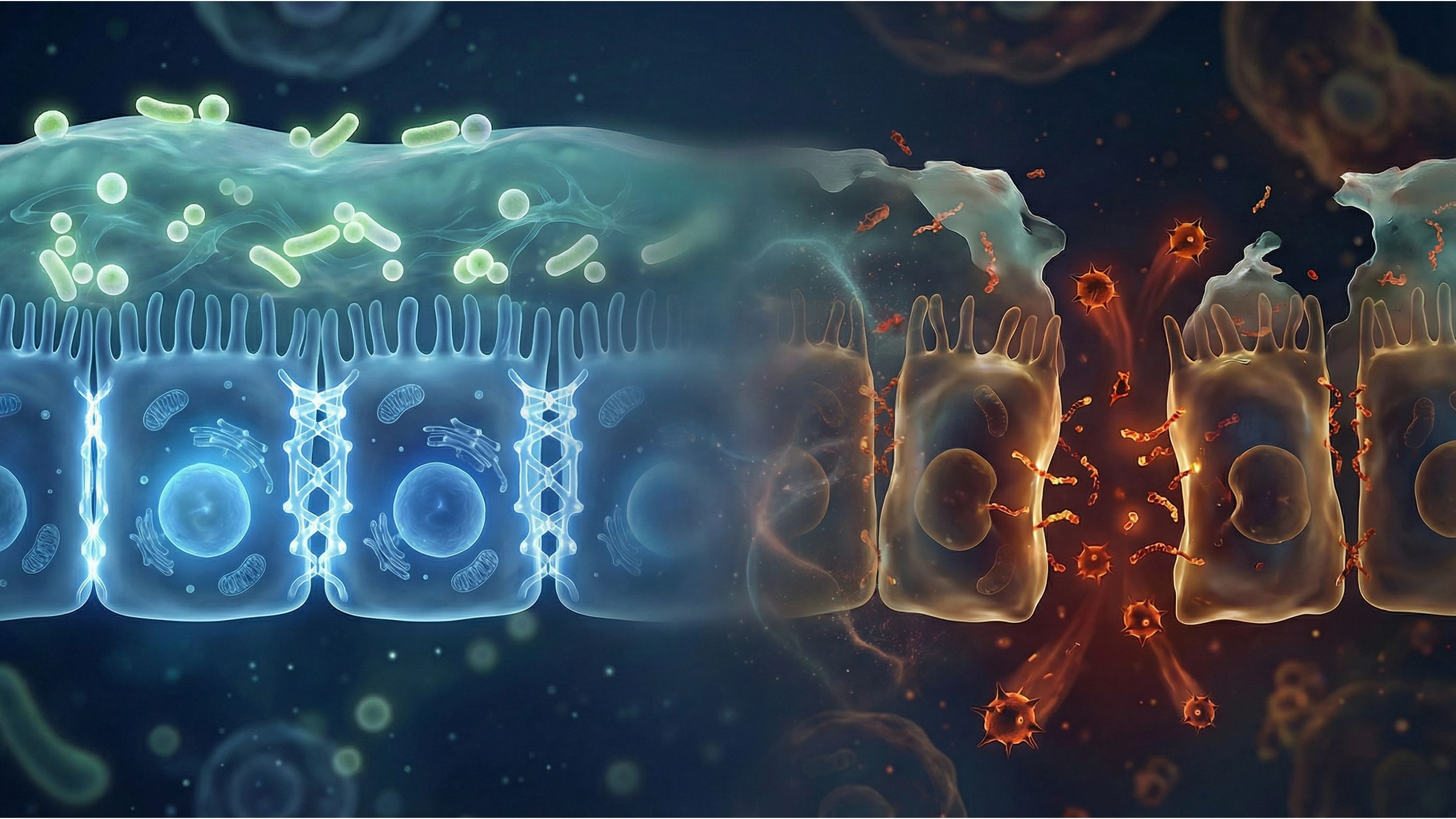
What functional gut health testing reveals that standard blood work was never designed to find
I've had this conversation more times than I can count. Someone sits across from me — or now, shows up in my inbox — and says some version of the same thing:
"My labs came back normal, but I feel terrible. My doctor says nothing's wrong."
And I believe them. Every single time.
Here's the thing: something is wrong. But the tools used to find it weren't built for what's actually happening inside that gut.
Standard blood panels are excellent at catching acute disease — infections, organ failure, clear metabolic crises.
What they were never designed to do is map the slow-moving, low-grade dysfunction that drives chronic fatigue, bloating, brain fog, skin flares, anxiety, and the dozen other symptoms that send people searching for answers.
That's where functional gut health testing comes in — and why I consider it the non-negotiable starting point for anyone serious about healing, not just symptom management.
In this article, you'll learn exactly what functional gut testing measures that a routine panel skips, why those specific markers matter for how you feel every day, and how having that data completely changes the conversation around what your body actually needs.
If you've been guessing your way through elimination diets, supplement stacks, and protocols that never quite stick — stay with me. There's something genuinely useful here for you.
Key Takeaways
- Standard blood work is built to rule out disease, not to uncover the subclinical dysfunction driving most chronic symptoms.
- Functional gut health testing measures markers like intestinal permeability (zonulin and occludin), secretory IgA, lipopolysaccharides (LPS), and short-chain fatty acids — none of which appear on routine panels.
- A compromised gut barrier allows bacterial toxins, undigested food particles, and inflammatory molecules to enter the bloodstream, triggering systemic inflammation that can show up as fatigue, joint pain, skin issues, anxiety, and more.¹,²
- Secretory IgA is your gut's frontline immune defense — the most abundant antibody in the intestinal lining — and compromised sIgA levels are associated with impaired mucosal immunity and increased vulnerability to enteric pathogens and toxins.⁴,⁵
- Food sensitivity testing (IgG-based) identifies delayed inflammatory reactions that are distinct from the immediate hypersensitivity of standard IgE allergy tests, with research linking IgG-mediated responses to intestinal permeability and systemic inflammation.⁸,⁹
- Gut barrier integrity and food sensitivity testing together give you a complete picture — not just what's damaged, but what's actively making the damage worse.
- Without knowing your specific markers, any protocol you follow is an educated guess. Testing turns guesswork into a roadmap.
Your symptoms deserve more than a "normal" result.
Get the personalized gut data that actually explains how you feel — and what to do about it.
🏥 Developed with functional medicine practitioners · Results in 2–3 weeks
Why your doctor's gut panel only tells half the story
Let me be clear about something important: conventional gastroenterology is exceptional at what it's designed to do.
Colonoscopies catch colon cancer. Upper endoscopies find ulcers. Standard stool cultures identify active bacterial infections.
These are lifesaving tools, and the physicians who wield them deserve enormous respect.
The limitation isn't competence — it's scope.
Most routine GI workups are designed around a binary: is there diagnosable disease, or isn't there?
That framework simply wasn't built to evaluate the gray zone where most people with chronic gut complaints actually live.
The gray zone of bloating that comes and goes. The fatigue that no amount of sleep resolves. The brain fog that makes a 3pm meeting feel like wading through wet concrete.
A standard metabolic panel measures kidney and liver function, blood sugar, electrolytes. A complete blood count checks your red and white blood cells.
What neither test measures is the integrity of your intestinal barrier, the state of your mucosal immune defenses, how much bacterial endotoxin is leaking into your bloodstream, or whether your gut bacteria are producing the short-chain fatty acids your colon cells depend on for fuel.
That's not a criticism. That's just honest about what the tool was built for.
Standard panels were built to rule out disease — not find what's driving your symptoms.
Functional gut testing goes deeper — mapping the exact markers that explain your fatigue, brain fog, bloating, and more.
🔒 CLIA-certified lab · At-home test kit · Results in 2–3 weeks
What functional gut health testing actually measures
This is where it gets genuinely interesting — and where people often tell me they finally feel like something makes sense.
An advanced gut health panel built around functional medicine principles looks at several layers of gut function simultaneously.
Here's what those markers mean in plain language.
Intestinal permeability markers (zonulin and occludin)
Zonulin is a protein that regulates the tight junctions between cells in your intestinal lining — essentially the gates that control what passes from your gut into your bloodstream.¹,²
When those gates stop working properly, the lining becomes permeable, allowing bacterial fragments, undigested food proteins, and inflammatory compounds to slip through.
This is what people mean by "leaky gut," and elevated zonulin levels in clinical studies have been associated with inflammatory conditions ranging from celiac disease to autoimmune disorders and metabolic disease.²
Occludin is a structural protein of those same tight junctions. When it degrades, the physical barrier weakens.
Neither marker appears on any standard blood test.
Lipopolysaccharides (LPS)
LPS are fragments of the outer membrane of gram-negative bacteria. Under normal circumstances, your gut barrier keeps them contained.
When the barrier is compromised, LPS leak into circulation — and the immune system responds with significant inflammation.
Elevated LPS has been linked in research to metabolic endotoxemia, a state of chronic low-grade inflammation associated with obesity, insulin resistance, and a range of systemic symptoms.³
Testing for LPS antibodies gives you a direct window into whether bacterial translocation is driving your inflammation.
Secretory IgA (sIgA)
This is one of the most underappreciated markers in gut health.
Secretory IgA is the most abundant antibody in your intestinal lining — your gut's first-line immune defense against pathogens and toxins.⁴
Research published in International Journal of Molecular Sciences describes sIgA as functioning through a process called immune exclusion — blocking pathogens from accessing epithelial receptors, entrapping them in mucus, and facilitating their removal from the intestinal lumen.⁵
Compromised sIgA levels are associated with impaired mucosal immunity and greater vulnerability to enteric pathogens and toxins.⁴
High sIgA can reflect active immune activation. Both patterns matter for your protocol, and neither shows up in any routine panel.
Short-chain fatty acids (SCFAs)
Butyrate, propionate, and acetate — produced by your gut bacteria when they ferment dietary fiber — are arguably among the most important compounds in your entire gut ecosystem.
Butyrate is the primary fuel source for colonocytes (the cells lining your colon). SCFAs also regulate gut inflammation, support the integrity of the intestinal barrier, and modulate immune responses.⁶
Research published in Beneficial Microbes identifies SCFAs as key mediators of the beneficial effects of gut microbiota on host health — including effects on appetite, glucose metabolism, and systemic immunity.⁷
When SCFA production drops — because fiber intake is low, or because the bacterial species that produce them are depleted — the downstream consequences ripple through energy, mood, immune function, and beyond.
What Standard Blood Work
Was Never Built to Find
Two tests. Two completely different jobs. Here's exactly what each one measures — and what falls through the gap.
"Normal labs don't mean nothing's wrong — they mean the right questions weren't asked."
The part that surprises people most: food sensitivity testing
Here's something I've watched play out in practice more times than I can count.
Someone has been following an impeccably clean diet for months. Grass-fed everything, organic produce, no gluten, no dairy. And they still feel lousy.
Then we test, and the results show significant IgG reactivity to salmon. Or pears. Or almonds. Something they've been eating every single day because they thought it was safe.
This is the distinction between an IgE-mediated allergy — the kind that shows up on standard allergy panels and causes immediate hypersensitivity reactions — and a delayed IgG-mediated food sensitivity.
Unlike IgE reactions, which typically produce rapid and dramatic responses, IgG food sensitivities produce delayed inflammatory responses that can emerge hours to days after exposure, making them nearly impossible to trace without testing.⁸
Why Your Allergy Test
Missed the Real Problem
Two immune reactions. Only one shows up on a standard allergy panel.
Standard allergy tests detect only IgE reactions — the fast, dramatic kind. But there's a second immune pathway that causes far more chronic suffering, and it's completely invisible to standard testing.
"Your 'clean' diet may include foods your immune system is reacting to every single day — and you'd never know without testing."
Research published in Frontiers in Nutrition found that IgG-mediated food sensitivities were significantly and positively associated with intestinal permeability biomarkers including LPS and occludin antibodies — suggesting a meaningful link between food-specific immune responses and barrier dysfunction.⁹
Testing identifies specifically which foods are triggering your immune system, across up to 176 foods.
One person I worked with — a woman in her late forties who had already done multiple elimination protocols, worked with several practitioners, and spent years trying to figure out her fatigue and joint pain — tested reactive to a handful of foods she was eating daily because she thought they were "healing" foods.
Within weeks of removing those specific triggers based on her data, her energy shifted noticeably. That's what personalized data does that guesswork can't.
Testing as a foundation, not a luxury
I want to be direct about something, because I think the wellness industry has created a lot of confusion here.
Functional gut health testing isn't the last resort you try after everything else fails. It's the starting point.
Protocols built without data are built on assumptions — and the problem with assumptions in a complex system like the human gut is that they're often wrong for you specifically, even if they're right statistically for someone else.
I've been doing this for a long time. I've seen people spend years and significant amounts of money on supplements, protocols, and programs that didn't work — not because they were the wrong interventions in general, but because they were addressing the wrong root cause for that individual.
One person's fatigue is driven by low sIgA. Another's is driven by elevated LPS and a compromised barrier. Another's is driven by SCFA deficiency.
The symptoms can look identical. The solution is completely different.
This is why the KBMO Gut Permeability and Food Sensitivity Testing exists — and why I stand behind it.
It measures the markers that actually explain why people feel the way they do, and it delivers that data in a format that makes it actionable with the help of a health coach.
the protocol that's right
for you.
"The symptoms look identical. The solution is completely different."
🏥 Functional medicine-backed · Personalized protocol included
What the gut can tell you that blood work cannot
One of the most important things gut testing for chronic symptoms reveals is the systemic nature¹,² of gut dysfunction.
Because the gut is connected to everything — immune function, neurological health, hormonal regulation, skin integrity — what's happening inside that lining often explains symptoms that appear to have nothing to do with digestion.
Anxiety and depression have been increasingly linked to gut-brain axis disruption, including research showing that bacterial product translocation from a compromised gut can propagate inflammation to the brain and impair neurological function.¹⁰
Skin conditions like eczema and psoriasis have measurable gut microbiome and barrier dysfunction correlations.¹¹
Fatigue that doesn't respond to sleep is often tied to LPS-driven systemic inflammation or downstream barrier failure.¹²
Standard blood work isn't designed to surface any of these connections. Functional gut health testing is specifically built to.
How a Leaky Gut Triggers
Symptoms All Over Your Body
When the intestinal barrier breaks down, the consequences ripple far beyond digestion.
Tight junction proteins — zonulin and occludin — degrade. Gaps open between intestinal cells, making the lining permeable.
Bacterial fragments (LPS), undigested food proteins, and inflammatory compounds slip through the gaps into circulation.
Your immune system mounts an inflammatory response — not just in the gut, but systemically. This low-grade, chronic inflammation is what drives the symptoms that seem unrelated to digestion.
"The gut is connected to everything — which is why gut dysfunction shows up as symptoms that seem to have nothing to do with digestion."
The connection your dentist probably never mentioned
And while we're on the subject of what standard tests miss — if you haven't explored the relationship between oral health and gut health yet, that's a conversation worth having.
The mouth is quite literally where everything begins.
Research published in Life (MDPI) confirms that more than 100 million bacterial cells from saliva are swallowed every day, seeding the gastrointestinal tract and continuously influencing gut microbiome composition.¹³
The balance — or imbalance — of your oral microbiome doesn't stay in the mouth. When dysbiosis takes hold in the oral cavity, it travels downstream.
Our Gateway to Health documentary series explores exactly this connection, with leading experts in oral microbiome health — and Episode 1 is available to watch free right now, for a limited time.
It's one of the most eye-opening conversations I've had about where chronic disease actually begins and what it takes to understand it at the root.
If you've ever dealt with gum issues, recurring dental problems, or oral health that just never quite seems right, our Orobiome Test maps the bacterial populations in your mouth the same way gut testing maps what's happening below — giving you data to work with, not guesses.
The oral bacteria testing connection to systemic health runs far deeper than most people ever realize.
If you've tried everything and still don't have answers
I want to speak directly to the people who've already done the work.
You've read the books. You've cleaned up the diet. You've tried probiotics, digestive enzymes, elimination protocols.
Maybe you've worked with multiple practitioners. And you still don't feel better.
The reason that pattern is so common isn't that the interventions are bad. It's that interventions without data are imprecise.
You've been making educated guesses in a system that's too complex for guessing to consistently work.
Gut testing markers explained — the actual biology of what's happening in your barrier, your immune response, your bacterial ecosystem — isn't just information. It's the difference between a map and wandering.
And for people who've been wandering for years, having a map is genuinely life-changing.
If that's where you are, the next step is simple: test first, then build the protocol. Everything else follows from knowing what's actually there.
If you want a deeper education on how your gut, immune system, and overall health are interconnected before you test — the Interconnected documentary series is available for limited-time free viewing right now.
It's one of the most comprehensive explorations of gut health and systemic wellness I've put together, and it will give you the foundational understanding to work with your results.

Sources
- Intestinal permeability defects: is it time to treat? Clinical Gastroenterology and Hepatology. 2013.
- All disease begins in the (leaky) gut: role of zonulin-mediated gut permeability in the pathogenesis of some chronic inflammatory diseases. F1000Research. 2020.
- Impaired Intestinal Barrier and Tissue Bacteria: Pathomechanisms for Metabolic Diseases. Frontiers in Endocrinology. 2021.
- Secretory IgA's complex roles in immunity and mucosal homeostasis in the gut. Mucosal Immunology. 2011.
- Secretory IgA in Intestinal Mucosal Secretions as an Adaptive Barrier against Microbial Cells. International Journal of Molecular Sciences. 2020.
- Role of short chain fatty acids in gut health and possible therapeutic approaches in inflammatory bowel diseases. World Journal of Gastroenterology. 2022.
- Short chain fatty acids in human gut and metabolic health. Beneficial Microbes. 2020.
- Prevalence of IgG-mediated food intolerance among patients with allergic symptoms. Annals of Saudi Medicine. 2016.
- Associations between food-specific IgG antibodies and intestinal permeability biomarkers. Frontiers in Nutrition. 2022.
- Gut microbiota, intestinal permeability, and systemic inflammation: a narrative review. Internal and Emergency Medicine. 2023.
- Gut–Skin Axis: Current Knowledge of the Interrelationship between Microbial Dysbiosis and Skin Conditions. Microorganisms. 2021.
- Increased gut permeability and bacterial translocation are associated with fibromyalgia and myalgic encephalomyelitis/chronic fatigue syndrome. Frontiers in Immunology. 2023.
- The Oral Microbiome and Systemic Health: Current Insights into the Mouth–Body Connection. Life. 2026.