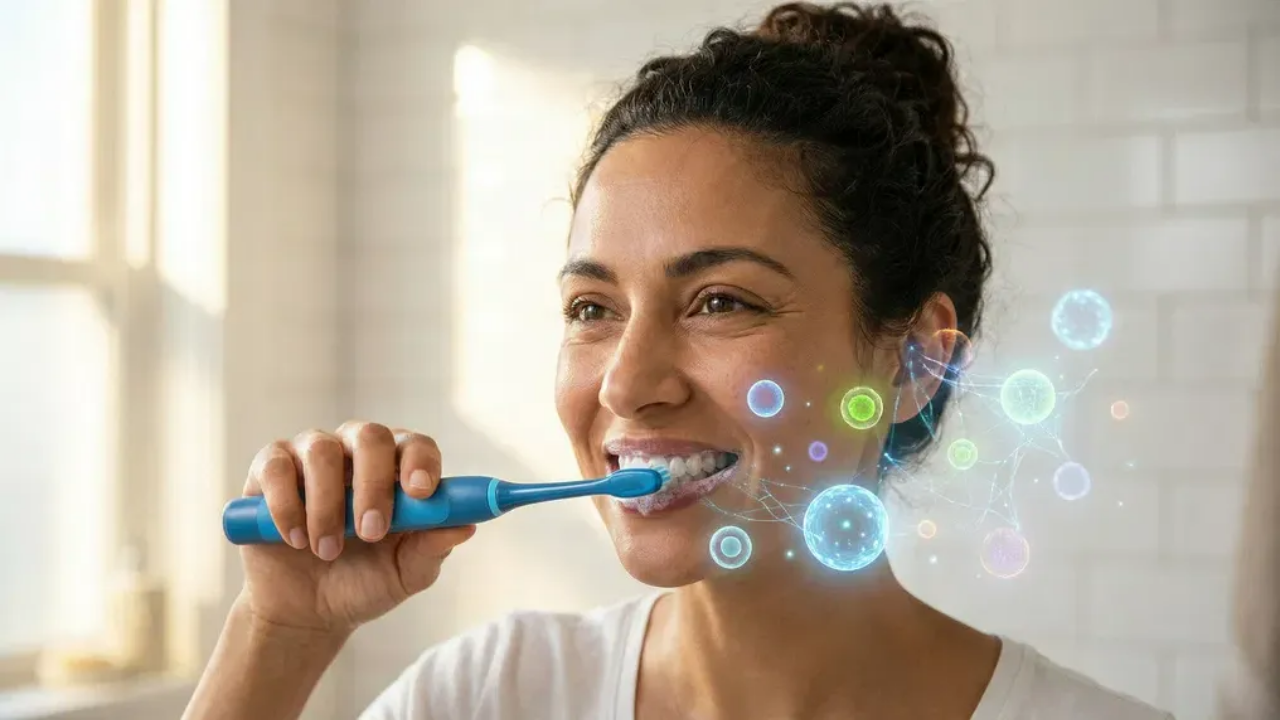
Achieving oral microbiome balance requires more than brushing — here's what actually works
I've seen countless patients who tell me they brush twice daily, floss religiously, and still struggle with bleeding gums, persistent bad breath, or cavities that seem to appear out of nowhere.
The frustration in their voices is real — they're doing everything their previous dentist told them to do, yet their oral health continues to decline.
Here's what I've learned after years of integrating oral microbiome science into clinical practice: achieving oral microbiome balance isn't about brushing harder or longer.
It's about understanding that your mouth hosts over 700 different bacterial species,¹³,¹⁴ and the key to health isn't eliminating bacteria — it's cultivating the right balance.
In this article, you'll discover why traditional oral hygiene alone can't restore a disrupted oral microbiome, which specific factors destroy your beneficial bacteria, and most importantly, how to identify and address your unique bacterial imbalances.
Because here's the truth most dentists don't tell you: you can't fix what you don't measure.
Keep reading — buried in this article is the single most important step you can take today to understand what's actually happening in your mouth.
Key Takeaways
- Oral microbiome balance means cultivating beneficial bacteria, not sterilizing your mouth.
- You swallow approximately 1.5 liters of saliva daily containing a large number of oral bacteria — imbalances directly impact systemic health²¹.
- Common disruptors include antibiotics,⁴ alcohol-based mouthwashes,⁵ and chronic stress⁶.
- Restoration requires 4-12 weeks with targeted protocols, but individual timelines vary.
- Signs of oral dysbiosis include bleeding gums, chronic bad breath, recurrent cavities, and white coating on tongue.
- Brushing and flossing maintain existing balance but cannot restore a disrupted microbiome.
- Oral microbiome testing reveals your specific bacterial blueprint and personalized restoration pathway.
Discover the Science Behind Oral-Systemic Health
Want to understand exactly why your mouth affects your entire body? Watch our comprehensive Gateway to Health documentary series exploring the oral microbiome's role in chronic disease, heart health, Alzheimer's, and more.
Free 10-day viewing — start learning today
Why Your Mouth Isn't Sterile (And Shouldn't Be)
Most patients are shocked when I tell them that a healthy mouth is teeming with bacteria.
We've been conditioned to think "bacteria = bad," but the reality is far more nuanced.
Your oral microbiome contains beneficial organisms like Streptococcus salivarius, which produces antimicrobial compounds that protect against pathogenic invaders, and Lactobacillus species, which help maintain healthy pH levels and produce vitamins.¹
These good bacteria control your oral pH, help digest food, protect against toxins, and even produce neurotransmitters that affect your brain.²
🦠 Your Oral Microbiome Ecosystem
700+ Different Bacterial Species
Your mouth hosts a complex ecosystem requiring balance, not elimination
✅ Most Common Beneficial Bacteria
Streptococcus salivarius
Produces antimicrobial compounds that protect against pathogenic invaders
Lactobacillus species
Maintains healthy pH levels and produces essential vitamins
⚠️ Most Common Pathogenic Bacteria (When Imbalanced)
Porphyromonas gingivalis
Associated with Alzheimer's disease and systemic inflammation
Fusobacterium nucleatum
Linked to pregnancy complications and inflammatory conditions
What Beneficial Bacteria Do For You
🛡️ Control oral pH to prevent acid damage
🍽️ Help digest food and produce nutrients
🧪 Protect against toxins and pathogenic bacteria
🧠 Produce neurotransmitters that affect brain function
The problem isn't bacteria itself — it's when pathogenic species like Porphyromonas gingivalis (linked to Alzheimer's disease)³ or Fusobacterium nucleatum (associated with pregnancy complications)¹⁵,¹⁶ outnumber the beneficial ones.
This imbalance, called oral dysbiosis, is what drives bleeding gums, tooth decay, and the oral-systemic health connections that affect your entire body.
Traditional dentistry focuses on removing plaque and treating symptoms. But if your underlying bacterial ecosystem is out of balance, those symptoms keep returning no matter how well you brush.
Discover Your Unique Bacterial Blueprint
Wondering which bacteria are dominating your mouth right now? Our comprehensive Orobiome Testing analyzes your specific bacterial populations and provides a personalized restoration protocol created by licensed dentists.
Stop guessing. Start testing.
What's Actually Destroying Your Oral Microbiome
Last month, a patient came to me confused.
She'd been using an "extra-strength" antiseptic mouthwash twice daily for years, believing it would prevent gum disease.
Instead, her gums bled constantly, and she developed recurrent cavities despite perfect brushing habits.
The mouthwash was killing everything — good and bad bacteria alike.
Here are the most common disruptors I see destroying healthy oral bacteria:
Broad-spectrum antibiotics wipe out bacterial populations indiscriminately.
While sometimes medically necessary, a single course can disrupt your oral microbiome for months.⁴
Many patients don't realize the antibiotic they took for a sinus infection is why their gums suddenly became inflamed.
Alcohol-based mouthwashes create a scorched-earth effect.
Research shows they can significantly reduce beneficial bacteria populations.⁵
Your mouth attempts to recolonize, but without the beneficial bacteria to dominate, pathogenic species often take over.
Chronic stress doesn't just affect your mind — it alters your oral bacterial composition.
Stress hormones change your mouth's pH and reduce saliva production, creating an environment where disease-causing bacteria thrive.⁶
High-sugar diets feed pathogenic bacteria that produce acid, demineralizing your teeth while simultaneously shifting your entire oral ecosystem toward dysbiosis.⁷
It's not just about cavities — it's about fundamentally altering which bacterial species dominate your mouth.
Dry mouth from medications represents one of the most underappreciated threats.
Saliva contains antimicrobial compounds and helps maintain healthy bacterial balance. Without adequate saliva, your oral microbiome shifts dramatically.⁸
The challenge? These factors often work together, creating a cascade effect that traditional brushing and flossing cannot address.
⚠️ What Destroys Your Oral Microbiome
These common factors can disrupt your bacterial balance for weeks or months
Broad-Spectrum Antibiotics
A single course can disrupt balance for months by killing beneficial and pathogenic bacteria indiscriminately
Alcohol-Based Mouthwashes
Creates a scorched-earth effect, allowing pathogenic bacteria to dominate during recolonization
Chronic Stress
Stress hormones alter oral pH and reduce saliva production, creating environments where disease-causing bacteria thrive
High-Sugar Diets
Feeds acid-producing bacteria that demineralize teeth while shifting your ecosystem toward dysbiosis
Dry Mouth / Medications
Reduces antimicrobial saliva, removing your mouth's natural defense system and bacterial regulator
🔄 These factors often work together, creating cascading effects that conventional oral hygiene cannot address
The Signs Your Oral Microbiome Needs Help
Many patients dismiss early warning signs as "just how my mouth is." But oral dysbiosis has distinct symptoms that shouldn't be ignored.
Bleeding gums during brushing isn't normal, despite what you might have been told. It indicates inflammatory bacteria have colonized your gum line, triggering an immune response.
One patient, similar to Doris from Kentucky in our community, reported that after years of accepting bleeding as "normal," proper bacterial balancing stopped the bleeding within a couple of weeks.
Persistent bad breath that doesn't respond to brushing often signals anaerobic bacteria producing volatile sulfur compounds deep in your oral tissues.⁹
Surface cleaning can't reach these bacterial colonies.
A white or yellow coating on your tongue indicates bacterial overgrowth, particularly of species that shouldn't dominate a healthy oral microbiome.
This isn't something you can simply scrape away — the underlying bacterial imbalance remains.
Recurrent cavities despite good oral hygiene suggest acid-producing bacteria have colonized your tooth surfaces.
The decay isn't really about your brushing technique — it's about which bacteria have taken up residence.
Chronic gum inflammation that persists despite professional cleanings points to deep bacterial imbalances that mechanical cleaning alone cannot resolve.
🚨 Warning Signs of Oral Dysbiosis
These symptoms indicate bacterial imbalance, not poor hygiene
Bleeding Gums During Brushing
Inflammatory bacteria colonizing your gum line trigger immune responses — not "normal" despite what you've been told
Persistent Bad Breath
Anaerobic bacteria producing volatile sulfur compounds deep in oral tissues — surface cleaning can't reach these colonies
White or Yellow Tongue Coating
Bacterial overgrowth of species that shouldn't dominate — scraping only treats the surface while imbalance remains
Recurrent Cavities Despite Good Hygiene
Acid-producing bacteria have colonized tooth surfaces — the issue is which bacteria dominate, not your brushing technique
Chronic Gum Inflammation
Persists despite professional cleanings — points to deep bacterial imbalances mechanical cleaning alone cannot resolve
⚠️ These bacteria don't stay in your mouth
You swallow ~2,000 times daily, sending oral bacteria directly into your gut and bloodstream
These symptoms are your body's way of telling you that your oral microbiome needs more than conventional care can provide. And here's what's critical to understand: these oral bacteria don't stay in your mouth.
Ready to Address Your Specific Imbalances?
Your symptoms are telling you something — but only testing reveals the full story. Get comprehensive bacterial analysis with licensed dentist consultation to create your personalized restoration protocol.
Your mouth. Your bacteria. Your roadmap to balance.
Why the Oral-Gut Connection Matters for Your Entire Body
Every time you swallow — and you do this about 2,000 times per day — bacteria from your mouth travel directly into your gut.
When your oral microbiome is balanced, this is beneficial.
When it's disrupted, you're essentially reseeding your gut with pathogenic bacteria thousands of times daily.
Research confirms that oral pathogens can establish colonies in your digestive tract, contributing to inflammatory bowel conditions, metabolic dysfunction, and immune dysregulation.¹⁰
🌐 The Oral-Gut Connection
Every single day, you swallow approximately:
2,000 times
That's 1.5 liters of saliva containing billions of oral bacteria traveling directly into your digestive system
👄
Oral Microbiome
700+ bacterial species living in your mouth
↓
With every swallow
🦠
Gut Microbiome
Oral bacteria establish colonies in your digestive tract
When Your Oral Microbiome is Balanced
✅ Beneficial bacteria support healthy digestion
✅ Immune system functions optimally
✅ Gut barrier remains strong and protective
When Your Oral Microbiome is Disrupted
⚠️ Pathogenic bacteria reseed your gut thousands of times daily
⚠️ Contributes to inflammatory bowel conditions
⚠️ Triggers metabolic dysfunction
⚠️ Causes immune dysregulation
🔄 Your mouth truly is the gateway to your body — oral health directly determines gut health and systemic wellness
I've seen patients with "unexplained" gut issues discover that their oral health was the connection all along.
The mouth truly is the gateway to your body — which is why oral microbiome balance affects far more than just your teeth and gums.
What Actually Restores Oral Microbiome Balance
Patients who see the most dramatic improvements follow a science-based restoration approach that goes far beyond brushing.
Targeted probiotic supplementation with specific strains like Streptococcus salivarius K12 can help recolonize your mouth with beneficial bacteria.¹¹
But here's the key: you need to know which bacteria you're deficient in before supplementing blindly.
Oral microbiome testing reveals exactly what your mouth needs.
pH balancing protocols create an environment where beneficial bacteria thrive while making it harder for pathogenic species to dominate.
This might include alkalizing rinses, dietary adjustments, or targeted supplements based on your test results.
Prebiotic support feeds beneficial bacteria, helping them establish stronger colonies.
This isn't about generic "good oral health" — it's about strategically supporting the specific bacteria that protect your unique oral ecosystem.
Biofilm disruption strategies break down the protective matrices that pathogenic bacteria hide within, making them vulnerable to your immune system and beneficial bacterial competitors.¹²
Systemic support addresses factors like stress, nutrition, and sleep that affect your oral microbiome from the inside out.
Most patients see significant improvements within 4-12 weeks of starting targeted protocols, though individual timelines vary based on the severity of dysbiosis and which specific bacteria need rebalancing.
The key is knowing where you're starting from.
This is precisely why I partnered with my husband, Dr. Pedram Shojai, to create the Gateway to Health documentary series.
We wanted to share the science behind oral-systemic connections and, more importantly, give people access to the testing they need to create personalized restoration plans.
Watch the Gateway to Health Documentary Series
Discover exactly why your oral microbiome affects everything from your heart to your brain.
Free 10-day viewing — start learning today
The Testing That Changes Everything
Here's what frustrates me about conventional dental care: we wait until there's visible disease before taking action.
We see bleeding, inflammation, or decay, and then we treat the symptoms.
But what if you could identify bacterial imbalances before they cause disease?
Oral bacteria testing analyzes the specific bacterial species in your mouth, their relative proportions, and which pathogenic bacteria pose the greatest risk to your systemic health.
This isn't a generic assessment — it's a detailed blueprint of your unique oral ecosystem.
When patients see their test results, everything clicks.
They finally understand why their bleeding gums persisted despite perfect brushing, or why they developed cavities in the same spots repeatedly, or why their gut issues wouldn't resolve despite dietary changes.
One patient recently told me, "I've been treating this blindly for years. Now I know exactly what my mouth needs."
That's the power of testing — it transforms oral care from generic protocols to personalized medicine.
Discover Your Unique Bacterial Blueprint
Wondering which bacteria are dominating your mouth right now? Our comprehensive Orobiome Testing analyzes your specific bacterial populations and provides a personalized restoration protocol created by licensed dentists.
Stop guessing. Start testing.
Your Next Step
If you've been struggling with oral health issues despite doing "all the right things," it's time to stop guessing and start measuring.
Your oral microbiome balance isn't about willpower or better brushing technique — it's about understanding your unique bacterial ecosystem and giving it what it needs to thrive.
The mouth is literally the gateway to your health. When you restore balance here, the effects ripple throughout your entire body.
Better cardiovascular health. Reduced systemic inflammation. Improved gut function. Clearer thinking. More energy.
But restoration starts with knowing where you stand.
Testing gives you that clarity. Personalized protocols give you the roadmap. And your consistent action creates the transformation.
The question isn't whether you should test your oral microbiome — it's why you'd wait another day to understand what's actually happening in your mouth.
Ready to Restore Your Oral Microbiome?
Get comprehensive oral bacteria analysis with licensed dentist consultation. Our Orobiome Testing identifies your specific bacterial imbalances and provides a personalized restoration protocol designed for your unique needs.
Your mouth. Your bacteria. Your personalized plan.

Sources
- Oral Microbiome: A Review of Its Impact on Oral and Systemic Health. Microorganisms. 2024.
- The Oral-Microbiome-Brain Axis and Neuropsychiatric Disorders: An Anthropological Perspective. Frontiers in Psychiatry. 2022.
- Determining the presence of periodontopathic virulence factors in short-term postmortem Alzheimer's disease brain tissue. Journal of Alzheimer's Disease. 2013.
- Same exposure but two radically different responses to antibiotics: resilience of the salivary microbiome versus long-term microbial shifts in feces. mBio. 2015.
- Effects of chlorhexidine mouthwash on the oral microbiome. Scientific Reports. 2020.
- Effect of psychological stress on the oral-gut microbiota and the potential oral-gut-brain axis. Japanese Dental Science Review. 2022.
- Altered salivary microbiota associated with high-sugar beverage consumption. Scientific Reports. 2024.
- The power of saliva: Antimicrobial and beyond. PLOS Pathogens. 2019.
- Intra- and extra-oral halitosis: finding of a new form of extra-oral blood-borne halitosis caused by dimethyl sulphide. Journal of Clinical Periodontology. 2007.
- Ectopic colonization of oral bacteria in the intestine drives TH1 cell induction and inflammation. Science. 2017.
- A preliminary study of the effect of probiotic Streptococcus salivarius K12 on oral malodour parameters. Journal of Applied Microbiology. 2006.
- Strategies for combating bacterial biofilms: A focus on anti-biofilm agents and their mechanisms of action. Virulence. 2017.
- The Human Oral Microbiome. Journal of Bacteriology. 2010.
- The oral microbiota: dynamic communities and host interactions. Nature Reviews Microbiology. 2018.
- Fusobacterium nucleatum: a commensal-turned pathogen. Current Opinion in Microbiology. 2015.
- Fusobacterium nucleatum Induces Premature and Term Stillbirths in Pregnant Mice: Implication of Oral Bacteria in Preterm Birth. Infection and Immunity. 2004.
- Oral microbiota in human health and disease: A perspective. Exp Biol Med (Maywood). 2023.
- The breadth of bacterial diversity in the human periodontal pocket and other oral sites. Periodontology 2000. 2006.
- Composition of the adult digestive tract bacterial microbiome based on seven mouth surfaces, tonsils, throat and stool samples. Genome Biology. 2012.
- The salivary microbiota as a diagnostic indicator of oral cancer: a descriptive, non-randomized study of cancer-free and oral squamous cell carcinoma subjects. Journal of Translational Medicine. 2005.
- Isolation, identification, and significance of salivary Veillonella spp., Prevotella spp., and Prevotella salivae in patients with inflammatory bowel disease. Frontiers in Cellular and Infection Microbiology. 2023.