Oral Microbiome Testing and Disease Prevention: Start Here
Oral microbiome testing and disease prevention could be the most important health decision you make this decade
Most people assume a clean bill of dental health means a clean bill of health — full stop. No cavities, no gum pain, nothing alarming on the X-ray. All clear, see you in six months.
But here's what that routine visit won't tell you:
Whether specific strains of bacteria are quietly living in your mouth right now, making their way into your bloodstream, and laying the groundwork for heart disease, cognitive decline, or colorectal cancer — years before a single symptom appears.
This is what oral microbiome testing and disease prevention is actually about.
In this article, you'll learn which oral pathogens pose the greatest systemic risk, what the research says, and why getting tested — not guessing — is the most powerful upstream move you can make for your long-term health.
If you prefer to start with film, watch the Gateway to Health documentary series free for 10 days — it brings this science out of the lab and into plain English.
Key Takeaways
- Your mouth harbors over 700 bacterial species — and the balance between them has direct consequences for your heart, brain, and gut.²
- Specific oral pathogens (P. gingivalis, T. denticola, F. nucleatum) are scientifically linked to heart disease, Alzheimer's disease, and colorectal cancer.²,³,⁵,⁶
- Periodontal disease is associated with a significantly elevated cardiovascular risk, independent of other traditional risk factors.⁷,⁸
- The importance of oral microbiome testing lies in this: a standard dental exam checks for structural damage, not microbial load.
- Most chronic disease processes begin years or decades before diagnosis — testing while asymptomatic is the point.
- Oral microbiome testing replaces guesswork with data, enabling targeted interventions based on your specific bacterial profile.
- Addressing oral dysbiosis has cascading benefits for gut health, immune function, and whole-body inflammation.
What Your Dentist Is Looking For vs. What Testing Actually Reveals
To be fair to conventional dentistry — and I say this as a dentist — the standard clinical exam is genuinely good at what it was designed to do.
It catches structural problems: cavities, cracked teeth, bone loss, the physical signs of gum disease. That matters.
What it was never designed to do is microbial profiling.
When you leave a routine cleaning with a thumbs-up, that means your teeth look okay and your gums aren't inflamed in a clinically measurable way.
It doesn't mean your oral microbiome is in balance.
It doesn't mean P. gingivalis isn't already present below the gumline.
It doesn't mean the bacteria you swallow every day — roughly 100 billion of them with every liter of saliva² — are the friendly kind.
What Gets Checked — and What Doesn't
A standard dental visit and an oral microbiome test are measuring entirely different things.
Standard Dental Exam
Checks for structural damage
✅ Cavities and tooth decay
✅ Bone loss on X-rays
✅ Visible gum inflammation
✅ Cracked or damaged teeth
✅ Physical signs of infection
What it cannot detect: which bacterial species are present, their load, or the systemic risk they carry.
VS.
Oral Microbiome Testing
Checks for microbial activity
🧬 Specific bacterial strains present
🧬 Bacterial load and dominance levels
🧬 Presence of high-risk pathogens
🧬 Systemic disease risk indicators
🧬 Data to build a targeted protocol
Uses DNA sequencing to identify what's living below the gumline — before symptoms appear.
A clean dental exam means your teeth look healthy. It doesn't mean your oral microbiome is in balance.
This isn't a criticism of conventional dentists. It's a systems gap that's been built into healthcare since 1839, when dentistry and medicine formally split into two separate professions.
That separation created a blind spot that we're only now beginning to close.
Oral microbiome testing fills that gap.
Using DNA sequencing technology, it identifies the specific bacterial strains in your saliva, their load, and what they mean for your systemic health risk.
Read more about how this oral-systemic connection plays out here.
Three Pathogens Worth Knowing By Name
Not every bacterium in your mouth is dangerous — most are neutral or actively protective.
The problem arises when specific opportunistic pathogens gain dominance, often silently, and often long before any pain sets in.
Porphyromonas gingivalis (P. gingivalis)
This is the one researchers keep returning to.
A review published in Critical Reviews in Microbiology found that oral bacteria associated with chronic periodontitis — P. gingivalis in particular — are being causally linked to Alzheimer's disease pathophysiology in susceptible individuals.³
A 2025 review in Frontiers in Immunology confirmed that P. gingivalis has been found in the brains and spinal cords of Alzheimer's patients.⁴
The mechanism involves enzymes called gingipains that can cross the blood-brain barrier and trigger the neuroinflammation associated with cognitive decline.
Treponema denticola (T. denticola)
Along with P. gingivalis and Tannerella forsythia, T. denticola makes up the so-called "red complex" — a trio of pathogens consistently linked to the most severe forms of periodontal disease and the chronic, low-grade systemic inflammation that drives metabolic dysfunction and cardiovascular risk.⁵
Bleeding gums, persistent bad breath, and receding gum tissue are the visible signs. What's less visible is where those bacteria travel after leaving the mouth.
Fusobacterium nucleatum (F. nucleatum)
This one has made significant waves in cancer research.
A landmark 2024 study published in Nature found that a specific subtype of F. nucleatum was present in up to 50% of colorectal cancer tumors analyzed, and was five times more likely to be found in the stool of colorectal cancer patients compared to healthy individuals.⁶
It is now considered a potential prognostic biomarker for more aggressive disease.
All three pathogens are identifiable through oral microbiome testing — before they've had decades to do damage.
See also: 5 oral pathogens destroying your heart and brain.
The Heart Connection Is Stronger Than Most People Realize
A comprehensive umbrella review published in BMC Oral Health in 2024 — covering 41 systematic reviews and meta-analyses — confirmed a consistent association between periodontal disease and cardiovascular disease, with odds ratios and risk ratios ranging from 1.22 to 4.42 and 1.14 to 2.88, respectively.⁷
A 2023 meta-analysis in Frontiers in Cardiovascular Medicine found this association held independent of sex and traditional cardiovascular risk factors like smoking and diabetes.⁸
The pathway is inflammation.
Oral pathogens that breach the gum barrier enter the bloodstream, trigger systemic inflammatory responses, and drive the kind of endothelial dysfunction that precedes heart attack and stroke.
The 2020 joint consensus report from the European Federation of Periodontology and the World Heart Federation, published in the Journal of Clinical Periodontology, concluded there is evidence supporting an independent relationship between severe periodontal disease and cardiovascular disease.⁹
By the time periodontitis shows up at a standard dental exam, those bacteria have likely been circulating for years.
For a deeper look, the oral health and heart disease piece here is worth reading.
The Mouth and Gut Are One Continuous System
The mouth and the gut are not separate ecosystems — they are one continuous digestive tract. When oral dysbiosis goes untreated, harmful oral bacteria don't just stay in the mouth.
Research shows they travel to the intestines via both the bloodstream and by being swallowed, where they can colonize, disrupt gut microbiome balance, contribute to intestinal permeability, and drive systemic inflammation.²,¹⁰
The Mouth-to-Body Pathway
How oral bacteria travel beyond the mouth and affect the whole body.
👄 Oral Dysbiosis Develops
Opportunistic pathogens gain dominance in the oral cavity — often silently, with no pain or visible symptoms. The balance between protective and harmful bacteria shifts.
↓
🩸 Gumline Breach & Bloodstream Entry
Harmful bacteria penetrate the gum tissue and enter the bloodstream. Even minor gum inflammation creates an entry point. An estimated 100 billion bacteria are swallowed per liter of saliva daily.²
↓
🔥 Systemic Inflammation Triggered
Once in circulation, oral pathogens activate the immune system. The result is chronic, low-grade systemic inflammation — a recognized driver of cardiovascular disease, metabolic dysfunction, and neurodegeneration.
↓
🚨 Organs & Systems Affected
Oral bacteria and the inflammation they trigger have been linked to damage in multiple organ systems — often years before a formal diagnosis.
🫀 Heart — endothelial dysfunction, atherosclerosis
🧠 Brain — neuroinflammation, cognitive decline
🦠 Gut — microbiome disruption, intestinal permeability
🔬 Colon — elevated colorectal cancer risk markers
This process can unfold over years — silently — before any symptom appears. Testing while asymptomatic is the point.
I wrote about oral bacteria and gut health dynamic in detail here.
This is why I often suggest that people concerned about their oral microbiome also look into gut testing.
If the mouth is dysbiotic, the gut has frequently been affected, too. Explore gut testing options here if that resonates.
Before Testing vs. After — What Actually Changes
I've seen this pattern repeatedly in consultations: a patient has spent years managing symptoms — fatigue, brain fog, recurring gum infections, digestive issues — without connecting those dots to their oral microbiome.
One woman in our community described spending years "doing everything right" with diet and lifestyle and still feeling pulled back.
Her oral microbiome test revealed elevated P. gingivalis and T. denticola. That was the starting point she had been missing.
That story is common.
And it illustrates the core value of oral microbiome testing — it replaces guesswork with data.
Instead of generic advice to brush better and floss more, you get a profile of your specific bacterial landscape, and from there, a targeted protocol that matches the actual problem.
Before testing, most people manage symptoms. After testing, they address causes.
What the Orobiome Test Package Includes
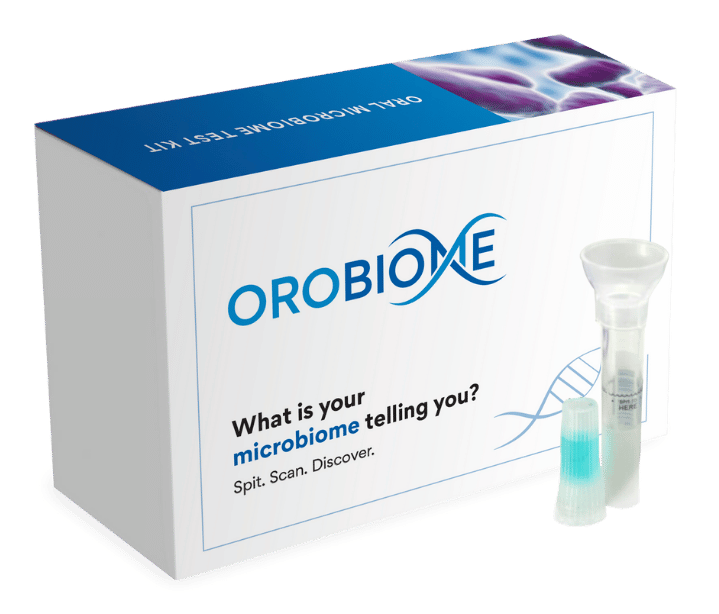
The Orobiome Test Package was built for exactly this purpose.
It includes an at-home, saliva-based oral microbiome test kit that uses bacterial DNA sequencing to identify which pathogens are present and at what levels.
From there, you get a 1-to-1 Oral Health Systems Review Call with a licensed dentist from my team — matched to your state — who will walk through your results in plain language and translate them into a personalized healing protocol.
You also get access to the full Gateway to Health documentary series, an oral care product recommendations guide, and 14-day group coaching access.
This is a data-driven, practitioner-reviewed process — not a supplement you order and hope for the best.
This Is What Upstream Prevention Actually Looks Like
The conventional medical model is good at treating disease once it's visible. What it struggles with is the years of silent imbalance before the diagnosis lands.
Oral microbiome testing and disease prevention is, at its core, an upstream intervention.
It asks: what is actually happening before it becomes something harder to reverse?
If you haven't yet explored the full scope of this connection, start with the oral health and chronic disease overview here.
The mouth is the gateway to health — not as a metaphor, but as a biological fact. What lives there shapes what happens throughout the rest of the body. Knowing what lives there is the first intelligent step.

Sources
- The oral microbiota: Dynamic communities and host interactions, Nature Reviews Microbiology, 2018.
- Oral Microbiome: A Review of Its Impact on Oral and Systemic Health, Microorganisms, 2024.
- Porphyromonas gingivalis and the pathogenesis of Alzheimer's disease, Critical Reviews in Microbiology, 2022.
- Porphyromonas gingivalis: A potential trigger of neurodegenerative disease, Frontiers in Immunology, 2025.
- Association of Periodontal Red Complex Bacteria With the Incidence of Gastrointestinal Cancers: A Systematic Review and Meta-Analysis, Cureus, 2024.
- A distinct Fusobacterium nucleatum clade dominates the colorectal cancer niche, Nature, 2024.
- Periodontal disease and cardiovascular disease: umbrella review, BMC Oral Health, 2024.
- Periodontal disease is associated with the risk of cardiovascular disease independent of sex: A meta-analysis, Frontiers in Cardiovascular Medicine, 2023.
- Periodontitis and cardiovascular diseases: Consensus report, Journal of Clinical Periodontology, 2020.
- The interplay between oral microbiota, gut microbiota and systematic diseases, Journal of Oral Microbiology, 2023.
Gateway to Health is the new health & wellness division of The Urban Monk. We've moved the health and life sciences content here and are leaving the personal development and mindfulness materials on theurbanmonk.com.
Disclaimer: This content is for educational purposes only and is not intended to diagnose, treat, cure, or prevent any disease. Please consult a qualified healthcare professional before making changes to your health protocol.