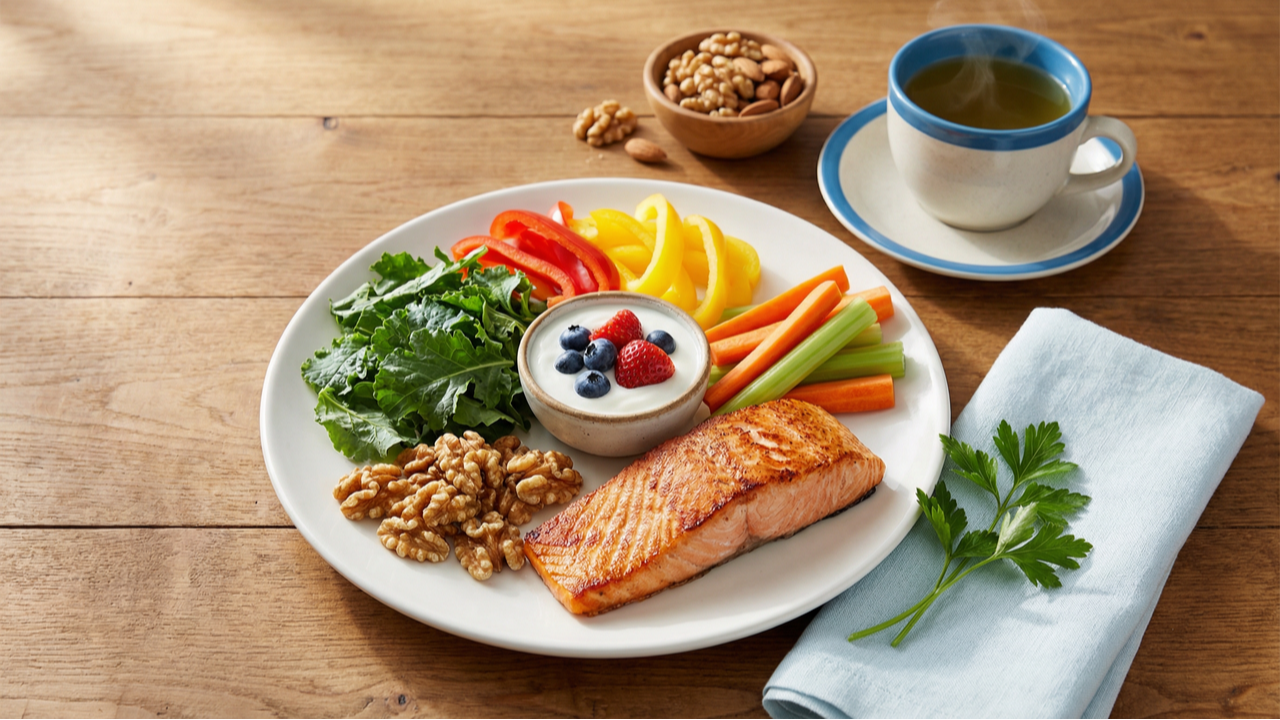
A diet for healthy teeth goes far beyond avoiding sugar — here's what the science actually says about fighting oral pathogens
I hear it all the time in my practice. Someone comes in frustrated.
They've cut out soda, switched to a natural toothpaste, and are flossing religiously — but they're still dealing with cavities, bleeding gums, or persistent bad breath.
The standard advice hasn't worked, and they're starting to wonder if something deeper is going on.
Something deeper is going on.
When people ask me about the right diet for healthy teeth, I always tell them the same thing: the toothbrush is just one part of the equation.
What you eat doesn't just feed you — it feeds the 700+ species of bacteria living in your mouth right now.¹
And those bacteria? They're either protecting your gums and enamel, or slowly destroying them.
In this article, I'll walk you through which foods actively fight oral pathogens, which nutrients your gums and teeth genuinely need, and why even the best diet sometimes isn't enough to tell you what's really happening in your oral microbiome.
Scroll through — the nutrients table in the middle of this article is something I wish every patient could see before their next checkup.
And if you've been curious about the science connecting your mouth to your overall health, I'd encourage you to watch the Gateway to Health documentary series — it's free for a limited 10-day screening, and it changed how many of my patients think about oral care entirely.
Key Takeaways
- Diet shapes your oral microbiome directly — dietary changes can drive significant shifts in oral bacterial populations, including changes in the richness and balance of microbial species.⁹, ¹⁰
- Omega-3 fatty acids (found in fatty fish, walnuts, and flaxseed) have been shown in multiple clinical studies to reduce gum inflammation and improve periodontal outcomes.²
- Vitamin D deficiency is associated with higher rates of cavities and periodontitis — severe deficiency can double your risk of dental caries.³
- Green tea catechins (EGCG) actively kill periodontal pathogens like P. gingivalis and inhibit cavity-causing S. mutans biofilm formation.⁴
- It's not just about removing bad foods — adding the right ones actively feeds the good bacteria and starves the harmful ones.
- The frequency of eating acidic or sugary foods matters more than quantity — your saliva needs time to restore pH balance between meals.
- Oral microbiome testing is the only way to know exactly which bacterial strains are present in your mouth — targeted nutrition without that data is still guesswork.
Your mouth is an ecosystem, not just a set of teeth
Here's something that took me years of clinical practice to fully appreciate:
The mouth isn't just the entryway to your digestive system. It's a living ecosystem, and what you put into it every day determines which organisms thrive there.
Our ancestral diets actually did a remarkable job of supporting a healthy oral microbiome.
Fibrous roots, fresh vegetables, and occasional animal proteins kept the bacterial balance naturally in check.
Then came refined sugars and processed carbohydrates — and with them, a massive shift in oral bacterial populations toward disease-producing species.¹
That shift is, in large part, why modern dental problems are so common despite better hygiene tools than any previous generation has had.
When I look at a patient with recurring cavities or chronic gum inflammation, my first instinct isn't to recommend a different toothpaste.
I ask them what they're eating — and more importantly, how often. If you want to understand the full picture of how oral health and chronic disease are connected, diet is one of the first threads to pull.
The bacteria-diet feedback loop you need to understand
Every time you eat, you're making a decision about which bacteria will dominate your mouth for the next several hours.
Refined carbohydrates and sugars are rapidly fermented by bacteria like Streptococcus mutans, which produce acids that drop your mouth's pH below 5.5 — the threshold at which enamel begins to demineralize.⁵
Your saliva then works hard to buffer that acid and restore balance, but if you're eating frequently or snacking throughout the day, it never fully gets the chance.
It's not just about quantity, either. The frequency of acid exposure matters enormously.
A single dessert at the end of dinner is very different from sipping juice or munching on crackers throughout the afternoon. The latter creates an almost constant acidic environment that your enamel can't recover from between exposures.
I remember a case a colleague shared with me — a young child who came in with severe cavities despite eating no refined sugar at all. His parents were completely baffled.
What we found was a dysbiosis — an imbalance in oral bacteria — that was driving decay independent of sugar intake.
Dietary changes targeting the bacterial imbalance, not just sugar removal, reversed his cavity progression entirely. This is exactly what we mean when we talk about functional oral health — treating the cause, not just the symptoms.
Best foods for healthy teeth and gums
So what should you actually be eating?
Here are the food categories that the research consistently supports for oral health — not because they're superfoods, but because of what they actually do inside your mouth at a microbial level.
Fatty fish, egg yolks, and grass-fed dairy
These are your best dietary sources of Vitamin D and Vitamin K2 — two nutrients that work together to get calcium into your teeth and bones rather than leaving it circulating in your bloodstream.
Vitamin D deficiency has been linked to tooth mineralization defects, higher cavity rates, and increased prevalence of periodontitis and gingival inflammation.⁶
Vitamin K2 activates osteocalcin, the protein that directs calcium into dental tissues where it belongs.⁷
Most people get enough calcium. Far fewer are getting enough of the nutrients that tell that calcium where to go.
Fatty fish and walnuts for omega-3s
Multiple clinical trials and meta-analyses now support omega-3 fatty acids (EPA and DHA, primarily found in fatty fish like salmon and sardines) as an adjunct therapy for periodontal disease.
Higher omega-3 intake is inversely associated with periodontitis severity in the US population,² and supplementation has been shown to significantly reduce periodontal pocket depth and gum inflammation when added to standard treatment.⁸
Walnuts and flaxseed offer plant-based sources (ALA) with similar anti-inflammatory properties.
Green tea
This one surprises a lot of my patients.
Green tea's polyphenols — particularly the catechin EGCG — have been shown in studies to kill periodontal pathogens like Porphyromonas gingivalis directly, while also inhibiting the biofilm formation of cavity-causing S. mutans.⁴
Catechins also help maintain a neutral pH in the mouth, which is protective against enamel erosion.
A cup or two of unsweetened green tea each day is one of the simplest dietary upgrades you can make for your oral microbiome.
Fibrous vegetables and crunchy whole foods
Raw carrots, celery, apples, and leafy greens aren't just nutritious — they physically stimulate saliva flow, which is your mouth's natural defense and pH buffer.
Dry mouth (clinically called xerostomia) dramatically accelerates cavity formation and disrupts the oral microbiome.¹
Chewing fibrous foods throughout the day keeps saliva flowing and mechanical plaque at bay.
There's also a historical dimension here: our pre-industrial ancestors gnawed on fibrous foods in ways that kept their oral microbiome far healthier than ours.
Fermented foods
Yogurt, kefir, kimchi, and sauerkraut introduce beneficial bacteria that can shift the oral environment in favor of health-promoting species. They're also some of the best food sources of Vitamin K2.
If you're interested in how your oral and gut microbiomes influence each other — and they are deeply connected — the Interconnected series offers a free limited-time viewing that covers this relationship in depth.
Key nutrients for periodontal disease prevention
This table is a quick reference for the nutrients most relevant to nutrition for periodontal disease and overall oral health.
These are the ones I most often discuss with patients who are dealing with recurring gum problems or persistent cavities despite good hygiene habits.
What a good diet for healthy teeth still can't do
I want to be direct with you here, because I think this is where a lot of people get stuck.
You can eat salmon three times a week, drink green tea daily, and load up on fermented vegetables — and you might still have an overgrowth of P. gingivalis quietly inflaming your gum tissue, or elevated S. mutans creating pockets you can't feel yet.
Diet shapes the oral microbiome powerfully. But it can't tell you the specific microbial balance you're working with right now.
The research is clear that different individuals have very different susceptibilities based on their unique bacterial profiles, genetics, and health history.¹
Two people can follow an identical anti-inflammatory diet for oral health and have completely different outcomes because their oral ecosystems are different.
This is why I always come back to testing.
If you've been diligent about your diet and hygiene but still experience recurring dental problems, that's your body telling you something specific is off in your oral microbiome.
The only way to know what that is — precisely — is to test for it.
This connects directly to what your standard dental tests might be missing from a bone and systemic health perspective as well.
It's also worth saying: your dentist isn't withholding this information.
The oral-systemic connection and microbiome testing are genuinely newer areas of clinical focus, and many practices are just beginning to integrate this science.
The oral-systemic connection has historically been underrepresented in dental school curricula, but that's rapidly changing.
Comprehensive microbiome testing simply gives you a data layer that a standard checkup isn't designed to capture.
The bottom line
The right diet for healthy teeth isn't about a single food or supplement.
It's about understanding that your mouth is a dynamic bacterial ecosystem, and the foods you eat every day are either supporting that ecosystem or destabilizing it.
Omega-3s, Vitamin D, Vitamin K2, green tea polyphenols, fermented foods, and saliva-stimulating whole foods all have meaningful, well-researched roles in keeping that ecosystem balanced.
But here's what I've seen consistently in clinical practice: the people who see the most lasting improvements are the ones who test first.
They stop guessing and start working from actual data about their oral microbiome. From there, every dietary and protocol decision becomes targeted and personal — not generic.
If you want to understand more about what's happening in your mouth right now, we've made it straightforward to find out.
The Orobiome Test provides a comprehensive analysis of your oral bacterial balance, along with a 1-to-1 review call with a licensed member of my team and a personalized healing protocol designed around your specific results — not a one-size-fits-all plan.

Sources
- Mouth Microbes: The Helpful and the Harmful. National Institutes of Health. 2019.
- Omega-3 Fatty Acids and Periodontitis in US Adults. Journal of the American Dietetic Association. 2010.
- The Influence of Vitamin D Levels on Dental Caries: A Retrospective Study of the United States Population. Nutrients. 2024.
- Antimicrobial effects of epigallocatechin-3-gallate, a catechin abundant in green tea, on periodontal disease-associated bacteria. Archives of Oral Biology. 2024.
- Diet and Nutrition to Prevent Dental Problems. National Library of Medicine. 2023.
- Vitamin D deficiency and oral health: a systematic review of literature. BMC Oral Health. 2025.
- Proper Calcium Use: Vitamin K2 as a Promoter of Bone and Cardiovascular Health. Integrative Medicine: A Clinician’s Journal. 2015.
- The effect of omega-3 fatty acids on active periodontal therapy: A systematic review and meta-analysis. Journal of Clinical Periodontology. 2022.
- Oral microbiome: Unveiling the fundamentals. Journal of Oral and Maxillofacial Pathology. 2019.
- Long-Term Fluctuation of Oral Biofilm Microbiota Following Different Dietary Phases. Applied and Environmental Microbiology. 2020.